Connect with us

Health

Using Diagnocat Reports to Boost Case Acceptance Rates

Published

on

One of the most common challenges in dental practice today is not just diagnosing a condition—but getting patients to accept the treatment they need. Fortunately, platforms like Diagnocat are making this easier by providing AI-powered visual reports that enhance patient understanding and trust, ultimately boosting case acceptance rates.

The Link Between Clarity and Commitment

Patients are far more likely to move forward with treatment when they clearly understand the diagnosis and its consequences. Traditional explanations, especially those based solely on verbal communication or technical radiographs, often leave patients confused or skeptical. Diagnocat changes this dynamic by delivering detailed, annotated visual reports that simplify complex dental findings into easy-to-understand visuals.

When patients can see a marked-up X-ray showing bone loss or a lesion around the root of a tooth, it’s no longer an abstract problem—it becomes real and tangible. This visual clarity helps patients grasp the urgency and necessity of the recommended procedure, turning doubt into action.

Turning AI Insights Into Educational Conversations

Dentists using Diagnocat can walk patients through the AI-generated findings in a collaborative, educational way. Instead of telling a patient they need a root canal, you can show them exactly where the issue lies, how extensive it is, and what could happen if it goes untreated. This transparency positions you as both a trusted advisor and a user of advanced, data-backed technology.

AI reports give your explanation credibility while helping patients feel involved in their own care decisions. This shared understanding leads to more confident, informed consent and, ultimately, a greater likelihood that the patient will proceed with treatment.

Enhancing Trust Through Technology

Modern patients are increasingly tech-savvy and expect their healthcare providers to use the latest tools. Diagnocat’s sleek, data-driven reports demonstrate that your practice is not only up-to-date but committed to accuracy and excellence. This alone can be a major factor in patient confidence.

When patients see that their diagnosis is supported not just by your expertise but also by cutting-edge AI, they’re more inclined to believe the findings are reliable. That trust—backed by transparent visuals and precise reporting—is essential to turning recommended treatments into accepted care plans.

Streamlining the Treatment Planning Conversation

Diagnocat reports don’t just help with diagnosis—they’re also a valuable asset in treatment planning discussions. You can use the same annotated images to outline the steps of care, explain why each phase is necessary, and show expected outcomes. Whether it’s a restorative, endodontic, or surgical case, the clear visual framework supports every part of the patient journey.

By connecting diagnosis directly to treatment, patients are less likely to view your recommendation as optional or speculative. Instead, they see it as a logical, evidence-based response to a clearly identified problem.

Measuring Success and Continuous Improvement

Clinics that implement Diagnocat regularly report not only better diagnostic accuracy but also higher case acceptance rates. Many practices use the platform’s reporting features to track which cases convert, how quickly patients respond, and what communication techniques are most effective. This kind of feedback loop allows your team to continuously improve your patient consultations and grow your practice more efficiently.

Conclusion

Using Diagnocat reports as part of your case presentation strategy transforms the way patients perceive, understand, and commit to treatment. By combining expert clinical insight with AI-backed visuals, you empower patients to make informed decisions with confidence. The result? Stronger trust, higher acceptance rates, and better outcomes for both patients and providers.

Continue Reading
Click to comment

Leave a Reply

Your email address will not be published. Required fields are marked *

Health

Egger Mielberg: A progressive doctor of the new generation.

Published

on

Egger Mielberg: A progressive doctor of the new generation.

Who is a new generation doctor?

This specialty is dictated by the need to keep pace with technological developments and make timely adjustments to clinical practice. Progressive in this context implies the ability, in parallel with technological capabilities, to change approaches to primary and laboratory diagnostics of various diseases for the purpose of accurately determining the etiological causes.

This places a high demand on the new generation of doctors to have competencies in several sciences simultaneously, such as bioinformatics, genetics, biochemistry and microbiology, as basic subjects. For example, an additional and mandatory course in doctor’s residency should also be AI and professional work with it. It is important to emphasize, working with it, not replacing work with it.

Why does a neurologist need to know microbiology?

For example, when diagnosing a central nervous system disease like multiple sclerosis, in which the immune system attacks the myelin sheath of nerves in the brain and spinal cord, disrupting signal transmission, a neurologist relies on early, pronounced symptoms. The leading method for

confirming multiple sclerosis is magnetic resonance imaging of the brain and spinal cord, which can detect plaques—foci of demyelination. After MRI confirmation of multiple sclerosis, a neurologist prescribes anti-inflammatory and immunosuppressant medications in 99% of cases.

And here we come to an important point: certain bacteria, such as Acinetobacter, can reduce the production of regulatory T cells, promoting an attack on the myelin of nerve cells. Also, given certain viruses, including the long-lived Epstein-Barr virus, can trigger the formation of autoimmune antibodies that attack the myelin of nerve cells. A neurologist’s expertise in microbiology and virology is crucial here, as it helps determine the underlying causes of the diagnosed disease, not just address the symptoms.

Why should a surgeon be able to work professionally with AI?

For example, if we take a surgical oncologist, who first identifies the tumor’s location, he must then know the extent of adjacent tissue damage to decide on the tumor’s resection area. It is important to understand the surgeon’s expertise in the risk of tumor spread to other organs and the potential alternatives to non-invasive treatment.

Acquiring and in-depth analysis of thousands of tumor removal surgeries performed, along with clinical outcomes, will allow surgical oncologists to minimize risks and select the optimal surgical approach.

What core competencies should a professional 21st-century doctor possess to maximize diagnostic accuracy and minimize harm to the patient?

Analytical skills, anatomical knowledge, and several basic subjects such as bioinformatics, genetics, microbiology and virology, and biochemistry.

Analytical skills deserve special mention as the most important quality and indicator of professionalism in a 21st-century doctor. Why? For example, a neurologist, when confronted with back or brain pain, will overwhelmingly order an MRI to identify the visible location of degenerative changes in the patient. If nothing is found, he will, again, refer the patient to another doctor.Here, the patient’s condition is directly affected by the neurologist’s level of analytical expertise in related medical fields, as the time it takes to reach a definitive diagnosis increases significantly.

It is also important to note that working with related medical fields is, in principle, impossible without strong analytical thinking and systems analysis.

“A professional doctor of the 21st century is first and foremost a strong analyst and, secondly, a physician!”

Egger Mielberg, founder of Arllecta Group, biotechnologist, clinical diagnostic laboratory physician, laboratory geneticist, medical microbiologist and mathematician.

Continue Reading

Health

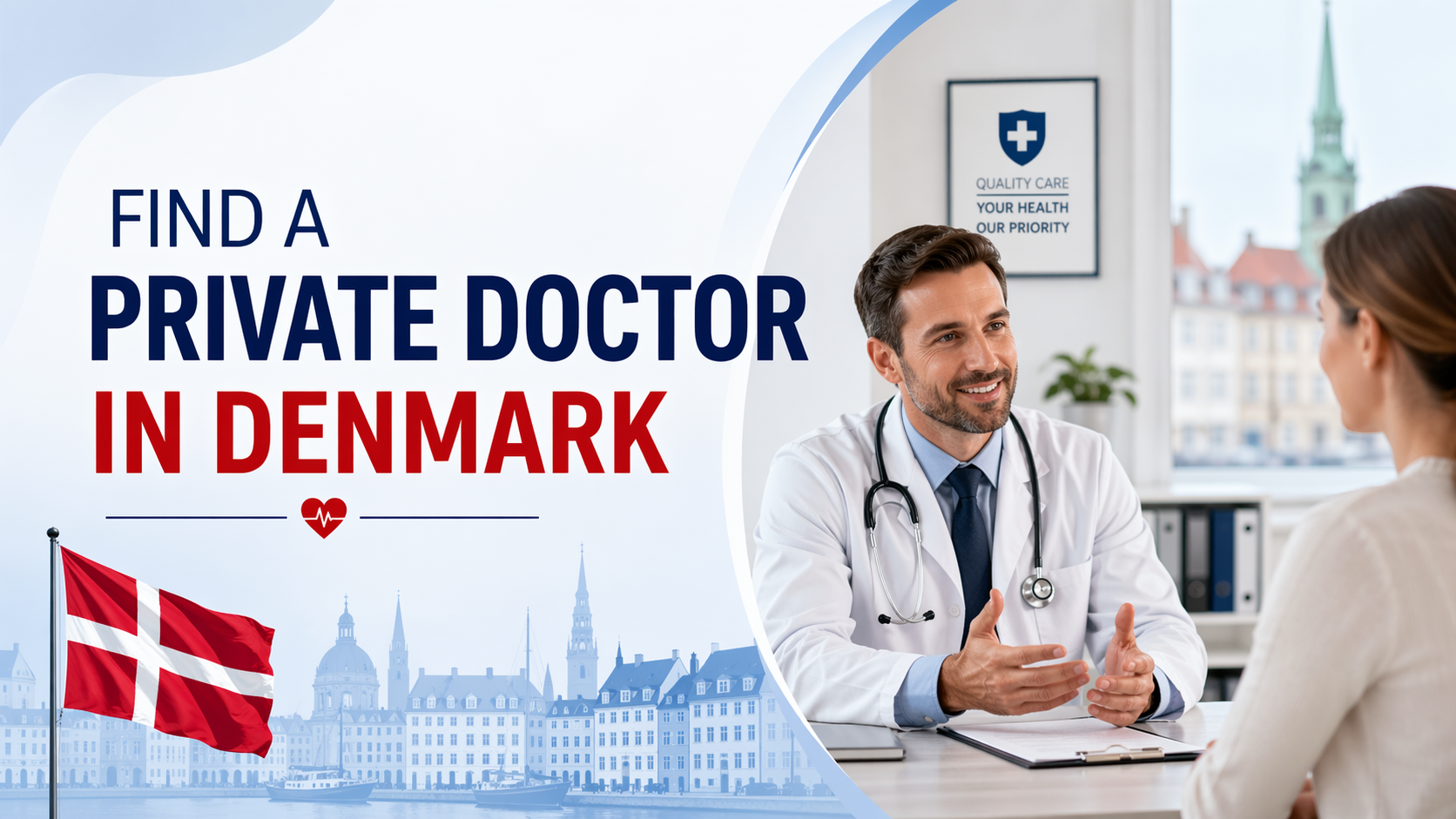
Find a Private Doctor in Denmark

Published

on

Find a Private Doctor in Denmark

Discover how to find a private doctor in Denmark with ease. Learn the benefits of private healthcare and what to consider when choosing your physician. This guide provides essential tips for securing quality medical care in Denmark.

When it comes to healthcare, having options is crucial. In Denmark, you have the opportunity to choose between public and private healthcare providers. Understanding the advantages and the process of finding a private doctor can significantly impact your overall healthcare experience.

Understanding the healthcare system in Denmark

The Danish healthcare system is renowned for its efficiency and accessibility. The public healthcare system provides comprehensive coverage, funded through taxes. However, many residents and expatriates opt for a private doctor for various reasons, including shorter wait times and personalised care. If you are considering a private doctor, it is important to understand the different services offered compared to public healthcare.

One significant benefit of choosing a private doctor is the ability to schedule appointments at your convenience, often with less waiting time. Furthermore, private doctors typically offer more personalised care and specialised services that may not be readily available through public healthcare. This can be particularly beneficial if you have specific medical needs or prefer more tailored treatment plans.

It’s worth noting that while private healthcare in Denmark offers certain advantages, it does not replace the public system entirely. Many individuals who opt for private doctors still maintain their public healthcare coverage. This dual approach allows patients to benefit from the strengths of both systems, utilising private care for specific needs or preferences while retaining access to comprehensive public health services for emergencies or other situations where public care might be more appropriate or cost-effective.

Reasons to choose private healthcare

Opting for private healthcare in Denmark can offer several advantages over the public system. One of these benefits is improved accessibility to specialists without the long wait times commonly experienced in public hospitals. Additionally, private healthcare often means better continuity of care, as you are more likely to see the same doctor regularly.

Furthermore, private clinics tend to have more modern facilities and equipment, which can contribute to a more comfortable experience. The ability to select a doctor based on personal preferences and expertise is another compelling reason for many individuals to choose this option.

Private healthcare in Denmark also offers enhanced privacy and confidentiality. For individuals who value discretion in their medical affairs, private clinics often provide a more secluded environment. This can be particularly important for those dealing with sensitive health issues or public figures who prefer to keep their medical consultations out of the public eye.

Moreover, private healthcare can offer access to certain treatments or medications that may not be readily available or approved within the public system, providing patients with a wider range of options for their healthcare needs.

How to find a private doctor in Denmark

The process of finding a suitable private doctor in Denmark involves several key steps. Initially, it is recommended to seek referrals from friends, family, or colleagues who have experience with local private practitioners. Online reviews and medical forums can also provide valuable insights into patient satisfaction and doctor performance.

Once you have identified potential doctors, verify their credentials through reputable sources such as medical boards and associations. Booking an initial consultation can help you gauge whether the doctor’s approach aligns with your expectations and needs. Remember that communication is vital; ensure that language will not be a barrier during your medical consultations.

Considerations when choosing your physician

Selecting the right physician requires careful consideration of several factors beyond just qualifications and experience. Evaluate the clinic’s location, as convenience can play a significant role in maintaining regular appointments. Doctors in Denmark has several clinic locations so you will often be able to find a doctor close to you. Additionally, consider the cost of services since private healthcare can vary greatly in pricing.

Lastly, assess the range of services offered by the clinic. Some doctors may specialise in particular fields of medicine which might be relevant to your health needs. Prioritising these aspects ensures that you receive comprehensive care tailored to your requirements.

Continue Reading

Health

4 Tips to Enhance Your Medical IoT Device’s Security 

Published

on

4 Tips to Enhance Your Medical IoT Device’s Security 

Technological advancements are helping revolutionize the healthcare ecosystem, with the Internet of Things (IoT) taking center stage as one of the most innovative technologies playing crucial roles in optimizing medical processes. However, the major challenge with the adoption of IoT medical devices is security. Implementing robust IoT healthcare security measures to safeguard your medical IoT infrastructure is essential as the risks associated with the technology continue to grow. The market value of the Internet of Things for healthcare hit a staggering $99 billion over the last few years, making it one of the fastest-growing industries, projected to hit $480 billion by 2031. Prioritizing medical device IoT security is a great way to protect patient data and minimize the threats of cyberattacks that often challenge healthcare organizations.

How to Improve Your Medical Business IoT Device Security

From smart homes to healthcare, IoT devices make a substantial impact on major industries. Unfortunately, the proliferation of the technology comes with significant security risks. Boosting IoT device security is especially vital in healthcare to maintain patient trust and ensure compliance. The following points outline the best practices for improving medical IoT devices security in your healthcare business.

  1. Secure Your Cloud Platforms

Cloud platforms are the preferred methods of storing data for many medical organizations and other businesses. Securing your cloud platforms should be a primary concern for healthcare leaders who want to protect their organizations from data breaches. You can enhance your cloud platform security by using authentication controls, such as multi-factor authentication, changing passwords regularly, and properly managing permissions and user credentials.

  1. Encrypt Data and Update Your Software and Firmware

Encryption is a vital component in protecting data stored and transmitted by IoT-enabled devices. It ensures that data remains unreadable to unauthorized users in the event of a system compromise. Employing industry-leading encryption protocols will help fortify your IoT medical device security. Medical businesses are also advised to regularly update their software and firmware to boost security. IoT medical device manufacturers often release updates to fix vulnerabilities in existing systems. Keeping up with new updates can prevent security loopholes that can compromise your patients’ safety. Automating updates is a great strategy to counteract emerging threats.

  1. Collaborate with IoT Medical Security Experts

IoT experts such as Empeek help medical businesses transform their healthcare IoT security. Collaborating with IoT companies will help you address common healthcare security issues that negatively impact customers’ experience and decrease efficiency. IoT security professionals can recommend practical security tips that your facility can adopt to ensure that sensitive patient data and your IT network stay safe. You can read this post here to learn more about the best practices to protect your medical IoT devices.

  1. Establish Robust Security Framework

It’s essential for hospitals and clinics to develop comprehensive security frameworks that encompass every facet of IoT device security. Thi includes, but is not limited to using robust access controls, implementing network segmentation and identifying IoT vulnerabilities in healthcare. Establishing robust security frameworks like these will ensure that your organization has the highest level of security. IoT medical devices should be strictly monitored and access controls should be set up appropriately.

Over 1,400 cyberattacks hit healthcare organizations in 2022 worldwide, a 74 percent increase from 2021. Enhancing healthcare IoT security is a complex but vital task for healthcare business administrators. Fortunately, you can reduce the risks of data breaches by implementing the above tips to protect sensitive patient data.

Continue Reading

Trending

Copyright © 2024.Nyweekly.co.uk