Connect with us

Technology

Best AI Presentation Platforms for Custom Branding and Editable Drafts in 2026

Published

on

Best AI Presentation Platforms for Custom Branding and Editable Drafts in 2026

Introduction

This article is for marketers, entrepreneurs, educators, and business professionals who need to create polished, on-brand presentations quickly and want to know which AI-powered platforms are worth their time. Whether you are building pitch decks, client proposals, training materials, or campaign briefings, the right tool can cut your production time significantly while keeping your visual identity consistent. After reading this, you will have a clear framework for evaluating your options and a concrete recommendation for where to start. No design background required.

Why AI Presentation Tools Have Changed the Game

Creating a strong presentation used to require either professional design skills or hours of wrestling with slide layouts. You would spend more time adjusting text boxes and hunting for images than actually refining your message. AI presentation platforms have changed that equation by generating structured drafts from simple prompts or existing documents, letting you focus on what you are trying to communicate rather than how to make it look good.

The current generation of tools goes well beyond slapping a template on your text. The best platforms can interpret context, suggest slide structure, source relevant visuals, apply brand guidelines automatically, and let multiple people collaborate in real time. For small businesses, in-house marketing teams, and solo operators, this is a meaningful shift in what is actually achievable without a creative agency.

That said, not every AI presentation tool is built the same way. Some prioritize speed and automation, others prioritize design flexibility, and a few try to do both. Understanding what actually matters for your specific use case is the starting point for making a smart choice.

10 Criteria for Evaluating AI Presentation Platforms

Before comparing specific platforms, it helps to have a consistent set of questions. Use this list to evaluate any tool you consider:

  1. Prompt-to-deck capability: Can the tool generate a full, structured slide deck from a text description or uploaded document, or does it only assist with individual slides?
  2. Brand customization depth: How thoroughly can you apply your own colors, fonts, and logos? Does the platform support a saved brand kit that applies automatically across new projects?
  3. Template quality and variety: Are the included templates professionally designe and genuinely adaptable? A large template library with poor quality is less valuable than a focused set with strong design.
  4. Editable output format: Can you download your finished presentation as a PowerPoint file or PDF? Can you continue editing in familiar tools like Microsoft PowerPoint or Google Slides after export?
  5. AI asset generation: Beyond the slide structure, does the platform help you generate or source images, icons, and graphics directly inside the tool? This matters when you do not have a ready media library.
  6. Collaboration features: Can multiple people review, comment, or co-edit simultaneously? For team environments, this determines whether the tool fits into existing workflows or creates a separate silo.
  7. Audience and tone controls: Can you specify who the presentation is for (executives, general audiences, technical reviewers) and adjust the level of detail accordingly? This determines whether the AI draft actually sounds like your communication, not a generic one.
  8. Free vs. paid access: What is available on a free plan, and where do the meaningful limits kick in? Some tools are genuinely useful for free, while others use free tiers primarily as previews.
  9. Integration with existing tools: Does the platform connect with tools you already use, such as cloud storage, PDF editors, or project management software? Workflow interruptions add friction even when the tool itself is strong.
  10. Learning curve and interface clarity: Can someone with no prior design experience open the tool and get to a usable draft within a few minutes? Complexity that requires onboarding investment a real cost for small teams.

Types of AI Presentation Platforms and What They Each Offer

Understanding the broader landscape makes it easier to narrow your options. AI presentation tools generally fall into a few categories, each with a distinct philosophy.

Fully Automated Generation Tools

These platforms are built around the idea that you should spend as little time as possible creating structure. You provide a topic or upload a source document, and the tool generates a complete draft with slides, copy, and visuals in place. The tradeoff is that automation can produce generic results when not carefully guided. The best tools in this category let you review and refine an outline before committing to the full design, which gives you meaningful control without requiring manual layout work.

When evaluating this type of platform, focus on how much editorial control you retain after generation. Can you adjust the outline before the slides are create? Can you regenerate individual slides without redoing the whole presentation? These small decisions have a large impact on whether the generated output actually fits your message or requires significant rework.

Template-First Platforms with AI Enhancements

Some platforms lead with a large library of professional templates and layer AI tools on top for things like image generation, text effects, and content suggestions. These are often the better choice for users who have a strong visual sense and want to maintain precise control over their design choices, but still want help with time-consuming tasks like sourcing assets or formatting.

The key question for this category is whether the AI features are genuinely integrated or feel tacked on. When AI image generation, text rephrasing, and content suggestions all live in separate menus and require different workflows, the time savings are minimal. Look for platforms where these features appear contextually, inside the editing experience, rather than requiring you to leave your workspace.

Document-to-Presentation Converters

A particularly useful category for business users is platforms that can ingest existing documents, such as PDFs, reports, or briefings, and generate a presentation from that source material. This eliminates the problem of manually translating written content into slide format, which is one of the most tedious parts of presentation production.

When evaluating this type of platform, test it with real documents from your workflow. Synthetic demos often use clean, well-structured source material that does not reflect the messy reality of most business documents. How the tool handles tables, footnotes, dense paragraphs, and charts embedded in a PDF will tell you more than any feature list.

Adobe Express: A Strong Option for Branded, AI-Generated Presentations

One platform worth a close look is the AI presentation maker from Adobe Express. It sits at an interesting intersection of automated generation and design-quality output, and it has several features that differentiate it from tools that treat presentation creation as a purely algorithmic problem.

The first standout feature is its document-ingestion capability. You can bring existing PDF files directly into the workflow through Adobe Acrobat integration, let the AI analyze the content, generate a structured outline, and then produce a complete presentation from that source material. For anyone who regularly turns written reports, proposals, or briefings into slide decks, this dramatically reduces the manual work involved.

The second differentiator is the depth of brand customization. Adobe Express allows you to save a brand kit with your specific colors, fonts, and logos, which gets applied consistently across presentations. You can also upload your own images and videos, apply your own templates, and adjust visual elements with a full suite of design tools that go beyond simple drag-and-drop. For business users who need every deliverable to reflect their visual identity, this level of control matters.

Third, the collaboration and export options are built for professional use. Teams can co-edit in real time, leave comments, and finalize presentations together without any file transfer. When the project done, you can present directly from within Adobe Express, download as a PDF, or export as a Microsoft PowerPoint file, making it compatible with whatever environment your audience is working in.

Adobe Express has both a free plan and paid tiers, with the full AI generation features available on Premium and above. It is particularly well-suited for marketers, small business owners, and teams that need to produce on-brand content quickly without relying on a dedicated design resource.

How to Match a Platform to Your Actual Workflow

Even the best-reviewed platform is only valuable if it fits how you actually work. Here are a few practical filters to apply before committing to any tool:

  • Volume and frequency: If you are creating one presentation per quarter, a premium subscription may not be justified. If you are producing decks weekly, the time savings on a paid plan will compound quickly.
  • Source material: If your presentations always start from existing documents, prioritize platforms with strong ingestion and conversion capabilities. If you are usually starting from scratch with a topic in mind, prompt-to-deck generation is the more important feature.
  • Audience expectations: Internal team presentations have different standards than investor pitches or client-facing proposals. Some tools are optimized for speed and informality, others for polished, boardroom-level output. Make sure the visual quality ceiling matches your highest-stakes use case.
  • Team size: Solo creators can get by with personal-use plans and limited export options. Teams need real-time collaboration, comment functionality, and version control to avoid the chaos of emailing draft files back and forth.
  • Brand sensitivity: If maintaining visual consistency is a business requirement, not just a preference, invest time in testing how well a platform applies and locks down brand elements. Some tools make it easy to drift from your guidelines accidentally.

FAQ

What is the difference between an AI presentation generator and a traditional presentation tool?

Traditional presentation tools like slideware software give you a blank canvas and expect you to fill it. You choose the layout, write the copy, source the images, and design each slide manually. An AI presentation generator removes most of that starting friction by interpreting your input, whether a text prompt or an uploaded document, and producing a structured draft that you can then refine. The key distinction is that you are editing and improving an existing draft rather than building from nothing, which is significantly faster for most business use cases. The quality of the draft varies by platform, so testing with your actual content is more informative than reading feature descriptions.

How important is brand customization when choosing an AI presentation platform?

For personal or informal use, brand customization may not matter much. For any business-facing context, it is one of the most important criteria. A presentation that uses the wrong font or an off-brand color palette signals carelessness to your audience, even when the content is strong. Look for platforms that support saved brand kits, allow custom font uploads, and apply your settings automatically to new projects rather than requiring manual reapplication each time. If you work within brand guidelines set by a parent organization, also check whether the platform allows you to restrict which design elements can be changed, so that team members cannot accidentally deviate from approved styles.For teams building out a brand system from scratch, a tool likeNotion can be useful for documenting and centralizing your brand guidelines before those standards get applied across presentation tools.

Can AI-generated presentations be used professionally without additional editing?

Rarely, and this is an important expectation to set. AI-generated drafts are strong starting points, not finished deliverables. The structure is usually solid, the layout is typically clean, and the visual elements are generally relevant. But the copy will often need to be tightened, the specifics of your business will need to be added, and the tone will need to be adjusted to match your voice. Think of the AI output as the equivalent of a capable first draft from a junior colleague: useful and time-saving, but requiring your judgment and editing before it goes to an audience.

What should I look for in collaboration features?

At minimum, look for the ability to share a link that gives others view or comment access without requiring them to create an account. Beyond that, genuine real-time co-editing is valuable for teams working under time pressure, and in-app commenting keeps feedback consolidated instead of scattered across email threads. Some platforms also support role-based access, which lets you control who can edit versus who can only view or comment. This matters in larger organizations where certain brand elements or slide structures need to stay locked. If your workflow involves handoffs between a content creator and a designer, also check whether the platform preserves formatting when a file is exported to PowerPoint or another format, since format degradation during export is a common frustration.

Is there a meaningful difference between free and paid plans for AI presentation tools?

Yes, and the gap is often larger than it appears from marketing descriptions. Free plans typically limit the number of AI-generated presentations you can create per month, restrict access to premium templates, and exclude the brand kit and advanced collaboration features that are most useful for professional work. For occasional, low-stakes use, a free plan may be sufficient. For any recurring business use, the limitations on AI generation volume and brand customization tend to make a paid plan necessary fairly quickly. The most useful way to evaluate this is to test the free plan with a real project under realistic time pressure, rather than a casual test, to see where the friction points actually appear before committing to a subscription.

Conclusion

AI presentation platforms have matured significantly, and the best ones now offer a genuine alternative to starting every deck from scratch. The right choice depends on how you work, what your output needs to look like, and how much control you need over the final product. Using the ten criteria outlined in this article, you can evaluate any platform on a consistent basis rather than being swayed by features that may not apply to your actual workflow.

If you need a tool that combines automated generation with strong branding controls and professional export options, Adobe Express is a solid place to start. Its document ingestion, brand kit support, and real-time collaboration features make it especially practical for business and marketing use cases. Whatever you choose, prioritize testing with real content from your own workflow. The best presentation tool is the one that consistently produces output you can actually use.

Continue Reading
Click to comment

Leave a Reply

Your email address will not be published. Required fields are marked *

Technology

piragnia and the Rise of Mysterious Online Identities

Published

on

By

piragnia and the Rise of Mysterious Online Identities

Introduction

The internet has created thousands of unusual terms, usernames, concepts, and coded identities that suddenly appear and attract attention without clear explanations. One of those emerging terms is piragnia. Although it is still relatively obscure, the word has started appearing in online discussions, niche communities, usernames, creative projects, and experimental branding spaces. Its unusual structure, memorable sound, and mysterious tone have made people curious about its meaning and purpose.

Unlike traditional words that come from dictionaries or established industries, piragnia feels modern, adaptable, and open to interpretation. That flexibility is part of what makes it intriguing. In online culture, names that sound distinctive often become symbols of identity, creativity, or exclusivity. People are naturally drawn to terms that feel rare, undefined, and emotionally charged. Piragnia fits into that category perfectly.

Another reason the term stands out is because it does not immediately reveal its function. Some internet-based names instantly tell people what they represent, but piragnia creates curiosity instead. That mystery encourages discussion, speculation, and exploration. Whether used as a project name, creative alias, brand identity, or online persona, the term carries an atmosphere that feels futuristic and unconventional.

As internet culture continues to evolve, words like piragnia are becoming increasingly valuable. They represent a shift away from generic naming and toward identities that feel unique and memorable. Understanding why such terms gain attention helps explain larger trends in online communication, branding, and creative expression.

What Is piragnia

Piragnia is an uncommon and largely undefined term that appears to function as a unique identity label rather than a traditional dictionary word. Because there is no universally accepted definition attached to it, the meaning of piragnia often depends on the context in which it is used. In many cases, it may serve as a username, creative title, project name, conceptual brand, or symbolic digital identity.

READ MORE: florncelol and the Internet Fame Nobody Expected

The structure of the word itself contributes to its appeal. Piragnia has a rhythmic sound that feels both modern and mysterious. Linguistically, it resembles invented brand names that are designed to stand out in crowded online spaces. Many modern internet identities follow a similar pattern by combining unusual syllables to create originality and memorability.

In online environments, undefined words often become powerful because they allow communities and creators to shape their meaning over time. Piragnia may represent innovation, secrecy, creativity, or individuality depending on who adopts it. This flexibility gives the term emotional and cultural value beyond a fixed definition.

There is also a psychological dimension to how people respond to words like piragnia. Human curiosity naturally increases when something feels partially hidden or unexplained. A name without an obvious meaning invites investigation, discussion, and interpretation. That interaction helps the term spread organically through communities and conversations.

The Growing Popularity of Unique Internet Terms

The rise of internet culture has changed how language evolves. In the past, words usually gained recognition through literature, academia, or mainstream media. Today, online communities can create and popularize entirely new terms within weeks. Piragnia reflects this modern phenomenon where identity and originality often matter more than dictionary recognition.

People increasingly search for names that feel exclusive and difficult to duplicate. Generic usernames and titles are often unavailable across major platforms, leading creators to invent completely new words. Piragnia fits perfectly into this trend because it sounds distinctive while remaining flexible enough for different uses.

Gaming communities, creative forums, social media platforms, and independent art spaces have especially contributed to the popularity of unusual terms. In these environments, a unique identity becomes part of personal branding. A memorable name can help someone stand out among millions of users competing for attention.

There is also a cultural fascination with ambiguity. Modern audiences often prefer concepts that encourage interpretation rather than offering immediate clarity. Piragnia carries this kind of open-ended appeal. Different individuals may associate it with mystery, technology, creativity, or artistic experimentation depending on their perspective.

As online identity becomes increasingly important, terms like piragnia are likely to gain even more attention. They represent a new form of language shaped by creativity, internet culture, and the desire for originality.

Why piragnia Feels Memorable

One reason piragnia attracts attention is its phonetic design. The human brain naturally remembers words that sound unusual yet balanced. Piragnia contains a mixture of sharp and flowing sounds, making it easy to pronounce while still feeling uncommon.

Branding experts often emphasize the importance of distinctiveness in naming. Names that resemble existing words too closely can disappear into the background. Piragnia avoids this problem because it feels original without becoming impossible to remember. That balance is difficult to achieve and contributes to its appeal.

Another factor is emotional resonance. Certain words create emotional reactions even when people do not fully understand them. Piragnia has a dramatic and somewhat cinematic quality that sparks imagination. It sounds like it could belong to a fictional universe, an experimental technology, or a hidden online movement.

The visual structure of the word also matters. In written form, piragnia looks symmetrical and modern. Short, visually balanced names often perform well in online environments because they are easy to recognize and aesthetically pleasing across different platforms.

This combination of sound, appearance, and mystery makes piragnia more memorable than many random invented terms. Even without a fixed meaning, it leaves a lasting impression.

piragnia as a Creative Identity

Creative individuals frequently search for names that separate them from mainstream trends. Piragnia has characteristics that make it suitable for artistic and experimental use. It feels abstract enough to support different interpretations while remaining recognizable.

Writers, musicians, designers, and independent creators often build entire identities around uncommon names. These names become symbolic representations of their style, philosophy, or creative direction. Piragnia could easily function in this way because it does not limit itself to one category or industry.

In artistic culture, mystery can become a form of value. Audiences are often drawn to creators who maintain an aura of unpredictability or conceptual depth. A term like piragnia naturally contributes to that atmosphere because it sounds layered and enigmatic.

There is also a growing trend toward immersive branding where creators design complete worlds around a name or concept. Piragnia has the flexibility to support storytelling, visual identity systems, fictional universes, or experimental media projects. That adaptability increases its long-term creative potential.

Because the internet rewards originality, creators who adopt distinctive identities often develop stronger audience recognition. Piragnia offers exactly the kind of memorable uniqueness that modern creative spaces value.

The Psychology Behind Mysterious Names

Humans are naturally attracted to mystery. Psychologists have long studied the curiosity gap, which describes how people become mentally engaged when they encounter incomplete information. Piragnia benefits from this effect because it suggests meaning without fully revealing it.

When individuals encounter a term that lacks an obvious explanation, they begin searching for patterns and interpretations. This process creates deeper mental engagement than straightforward language. Instead of quickly forgetting the word, people continue thinking about it.

Mysterious names also create emotional projection. Since piragnia does not have one official meaning, individuals can attach their own interpretations to it. One person may see it as futuristic, another may view it as artistic, and someone else may associate it with gaming or online culture.

This flexibility increases emotional connection because the term adapts to personal imagination. In many ways, undefined names can become more powerful than clearly defined ones because they leave room for individual interpretation.

Modern internet culture thrives on symbolism, hidden meanings, and layered identity construction. Piragnia fits comfortably within this psychological landscape, which helps explain why such terms continue gaining attention.

Could piragnia Become a Recognized Brand

Many globally recognized brands started as unfamiliar invented words. Companies often create entirely new names because originality improves memorability and legal uniqueness. Piragnia has several qualities that align with modern branding principles.

The name is short enough to remember yet unusual enough to avoid blending into existing terminology. It also sounds adaptable across different industries. Piragnia could theoretically function as a creative studio, technology concept, entertainment project, gaming identity, fashion label, or artistic platform.

Strong brands often rely on emotional tone rather than literal meaning. Some of the most successful names in the modern era gained recognition because they sounded distinctive and emotionally engaging. Piragnia carries a similar potential because it already feels atmospheric and symbolic.

Another important branding factor is search uniqueness. Rare terms are easier to identify online because they face less competition from unrelated results. Since piragnia is uncommon, it naturally stands out in searches, discussions, and usernames.

Whether the term eventually develops into a recognized brand depends on how people use and shape it over time. Internet culture has repeatedly shown that even obscure words can evolve into influential identities when supported by strong communities or creative projects.

The Cultural Value of Invented Language

Invented language has always played an important role in human culture. Fictional worlds, artistic movements, and emerging communities frequently create new vocabulary to express identity and belonging. Piragnia reflects this broader cultural pattern.

Online spaces accelerate the evolution of invented language because communication spreads instantly across global audiences. A term that begins in a small niche community can rapidly expand into wider cultural awareness. The process is unpredictable, but originality often increases the chances of growth.

Invented words also allow people to escape traditional expectations. Existing language sometimes carries historical baggage or fixed interpretations. A new term like piragnia offers a blank canvas that creators and communities can redefine according to their own values and imagination.

This freedom is especially important in modern internet culture, where individuality and self-expression hold significant social value. People increasingly seek identities that feel separate from conventional systems. Piragnia represents the type of open-ended concept that supports this desire for uniqueness.

READ MORE: pvng Transforms Hotel Finance With Smarter Reporting

Conclusion

Piragnia stands as an example of how modern internet culture transforms language, identity, and creativity. Although the term does not yet have a universally accepted meaning, its uniqueness is precisely what gives it strength. It feels mysterious, memorable, adaptable, and emotionally engaging, which makes it highly suitable for modern online environments.

The growing interest in unusual terms reflects larger cultural changes. People increasingly value originality, symbolism, and flexible identity construction. Piragnia fits naturally into this landscape because it invites curiosity instead of offering rigid definitions.

Whether used as a creative identity, experimental brand, online alias, or conceptual idea, piragnia carries the kind of rare individuality that modern audiences notice. Its appeal comes not only from how it sounds but also from the psychological and cultural space it creates. In a world crowded with repetitive language and predictable branding, distinctive names like piragnia have the power to leave lasting impressions.

FAQs

What does piragnia mean?

Piragnia does not currently have one officially recognized definition. It is generally viewed as a unique and creative term used for identity, branding, or artistic purposes.

Why is piragnia gaining attention online?

Piragnia attracts attention because of its mysterious sound, memorable structure, and flexibility. People are naturally curious about unusual and undefined names.

Is piragnia connected to a specific industry?

At the moment, piragnia is not strongly tied to one industry. It can potentially fit creative, entertainment, gaming, branding, or artistic spaces.

Can piragnia be used as a brand name?

Yes, piragnia has qualities that make it suitable for branding. It is distinctive, easy to remember, and uncommon enough to stand out.

Why do people like mysterious names like piragnia?

Mysterious names encourage curiosity and emotional interpretation. They allow individuals to attach personal meaning and imagination to the term, which increases engagement and memorability.

READ MORE: https://nyweekly.co.uk/

Continue Reading

Technology

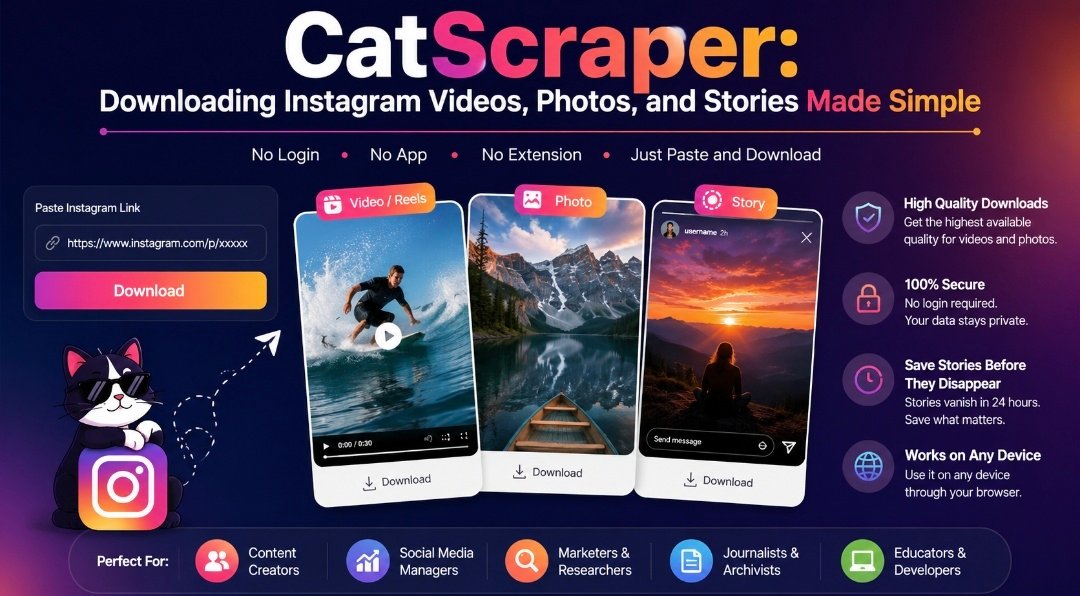
CatScraper: Downloading Instagram Videos, Photos, and Stories Made Simple

Published

on

CatScraper: Downloading Instagram Videos, Photos, and Stories Made Simple

Instagram has a way of making things deliberately difficult. You can browse the entire platform, watch every video, scroll through every story, and at no point does the app offer you a download button for anything outside of your own posts. It’s a closed loop by design, meant to keep content living inside Instagram and nowhere else. For a lot of people that’s fine. But for content creators, social media managers, marketers, researchers, and archivists, it creates a real problem. That’s where CatScraper comes in.

CatScraper is a downloader built specifically for Instagram that handles videos, photos, and stories in one place. You give it the link to a post, a reel, or a public profile’s story, and it pulls the media files so you can save them locally. No login required, no browser extension, no app download. It works through the web, which makes it accessible on any device and keeps things simple from the start.

The three content types it covers are worth talking about separately because they each present their own set of challenges.

Videos and reels are the most commonly downloaded content type, and CatScraper handles them well. It fetches the highest available quality version of the file, which is important because some tools compress the footage during download and you end up with something noticeably worse than what was actually posted. Quality loss matters when you’re using the content for anything beyond casual reference.

Photos work just as cleanly. Instagram often displays compressed previews of images within the app, and without the right tool, people end up saving those lower-resolution previews instead of the actual uploaded files. CatScraper pulls the full-resolution image, which is what you actually want if you’re going to use it for anything meaningful. Whether it’s a product photo you want to reference, an infographic you need to study, or just an image you’d like to keep, getting the real file rather than a compressed thumbnail makes a genuine difference.

Stories are the most time-sensitive category. They disappear after 24 hours, which is the whole point of them, but that also means any information, announcement, or content shared in a story format is gone almost immediately.For social media managers who need to track competitor activity, or for researchers documenting how brands communicate, that ephemeral nature creates a practical problem. CatScraper gives you a window to save story content before it expires.

A quick note on what CatScraper can and can’t do: it works with public accounts. Private accounts are not accessible, which is how it should be. Content that someone has chosen to restrict to their followers isn’t something any ethical tool should bypass. For everything that’s publicly posted, though, the tool is effective and consistent.

The use cases for something like CatScraper are broader than you might expect at first. Beyond individual creators saving content they like, the tool sees real use from marketing teams doing competitive research, journalists archiving posts for reporting purposes, educators pulling examples for classroom discussions, and developers building datasets for various projects.In each of those contexts, having a reliable way to save Instagram content without working around the app’s limitations manually is a meaningful time saver.

There’s also the archiving angle that applies across all platforms right now. Content disappears. Accounts get deleted, posts get taken down, brands rebrand and purge their old content. If you encounter something worth keeping, saving it while you can is simply the practical approach.

CatScraper doesn’t try to be everything. It’s focused on Instagram, it handles the three main content types well, and it stays out of your way. For anyone who works with Instagram content regularly, that combination of simplicity and reliability is exactly what the situation calls for.

Continue Reading

Technology

florncelol and the Internet Fame Nobody Expected

Published

on

By

florncelol and the Internet Fame Nobody Expected

Introduction

The internet has a strange way of turning ordinary names, usernames, and random moments into cultural phenomena. One day a word exists quietly in a corner of the online world, and the next day thousands of people are discussing it across gaming communities, livestreams, memes, and social platforms. That is exactly what happened with florncelol.

At first glance, florncelol looks like a random internet username with no deeper meaning attached to it. Yet the growing attention around the term has transformed it into something much larger than a simple online identity. Discussions about florncelol have spread through gaming circles, reaction videos, online forums, and meme culture, creating curiosity among people who had never seen the name before.

Part of the fascination comes from how unpredictable internet culture has become. In earlier years, fame was usually connected to celebrities, artists, athletes, or public figures. Today, a unique username can suddenly gain massive attention simply because online communities decide it is interesting, funny, mysterious, or entertaining enough to share repeatedly. Florncelol became one of those unusual examples that demonstrates how modern internet culture works.

The story surrounding florncelol also reveals something important about gaming communities and online identity. Usernames are no longer just labels attached to player accounts. They often become personal brands, social identities, and cultural references that carry emotional reactions and community recognition. In many online spaces, a memorable username can become more recognizable than a person’s real name.

As interest around florncelol continued to spread, people began searching for its origins, meaning, and connection to gaming culture. The result was a wave of speculation, memes, theories, and commentary that elevated the name far beyond its original purpose.

What Is florncelol

Florncelol is widely recognized as a viral online username associated with gaming communities, especially discussions connected to League of Legends streams, memes, and internet reactions. Over time, the term evolved from a simple gamer tag into a recognizable online reference discussed across multiple platforms.

READ MORE: pvng Transforms Hotel Finance With Smarter Reporting

Most explanations suggest that florncelol combines the word “Florence” with “lol,” a long-established internet abbreviation connected to humor and online communication. This unusual combination gave the name a playful and memorable quality that helped it stand out in crowded gaming spaces.

The popularity of florncelol was not created through traditional media or advertising. Instead, the attention grew naturally through livestream reactions, community discussions, screenshots, memes, and repeated online references. That pattern reflects how modern internet fame often works. People discover something unusual, begin sharing it ironically or humorously, and eventually create a wider trend around it.

What makes florncelol especially interesting is that the term itself carries ambiguity. Some people see it purely as a gaming username, while others view it as a symbol of internet humor and modern online identity. Because there is no rigid definition attached to the word, communities continue shaping its meaning through ongoing discussion and reinterpretation.

This flexibility is one reason the name continues attracting curiosity. Internet culture often rewards mystery and unpredictability. A strange or unexpected term can survive online far longer than something completely straightforward or easily explained.

The Gaming Culture Behind florncelol

Gaming culture has always played a major role in shaping internet trends. Competitive games, livestreaming platforms, and online chat communities create environments where small moments can rapidly become viral topics. Florncelol emerged within that atmosphere.

Online gaming communities are highly social environments where usernames become important forms of identity. In many cases, players spend years building reputations attached to a single name. A unique username can create recognition, emotional reactions, jokes, and even loyalty among viewers and fellow players.

League of Legends communities, in particular, are known for creating viral moments around unusual player names, livestream incidents, and community interactions. The discussions surrounding florncelol appear closely connected to this type of environment.

The rise of streaming platforms also amplified the visibility of usernames. In earlier gaming eras, usernames mostly stayed within the game itself. Today, livestreams display player names to massive audiences in real time. Viewers clip reactions, share screenshots, and repost memorable moments across social media within minutes.

That system creates perfect conditions for a name like florncelol to spread rapidly. Once enough people found the name entertaining or intriguing, it became part of a larger cycle of memes and online commentary.

Another factor behind the popularity of florncelol is the emotional nature of gaming communities. Competitive games create intense reactions ranging from humor and excitement to frustration and drama. Internet culture often transforms those emotional moments into shareable entertainment, and usernames associated with those moments can quickly gain lasting recognition.

Why florncelol Became Viral

Virality on the internet rarely follows predictable rules. Sometimes high-budget campaigns fail completely, while random usernames unexpectedly dominate conversations for weeks. The rise of florncelol reflects this unpredictable nature perfectly.

One reason florncelol spread so quickly was its uniqueness. The name looks unusual enough to capture attention immediately. Many viral internet terms succeed because they feel visually distinctive or emotionally memorable. Florncelol fits that pattern well.

Another reason was repetition. Once gaming communities began mentioning the name repeatedly, curiosity increased naturally. People who had never heard of florncelol started searching for explanations simply because they kept encountering the term in discussions, livestreams, and memes.

Internet humor also played a major role. Many viral trends grow through irony rather than serious discussion. Users repeat certain phrases or names because they find the reactions entertaining. Over time, the repetition itself becomes part of the joke. Florncelol appears to have benefited heavily from this type of online behavior.

Social media algorithms further accelerated the trend. Modern platforms reward engagement, emotional reactions, and repeated interaction. When users commented on or searched for florncelol, platforms recognized the growing activity and pushed related content to more viewers.

The mystery surrounding the name added another layer of interest. People are naturally curious about unexplained online trends. When something becomes popular without a clear origin story, audiences often become even more invested in uncovering its meaning.

Online Identity and the Power of Usernames

The story of florncelol reveals how important usernames have become in modern internet culture. In the past, usernames mainly served practical purposes for logging into websites or multiplayer games. Today, they often function as personal identities with emotional and cultural value.

For many younger internet users, online identities can feel just as important as real-world recognition. A memorable username may represent years of friendships, gaming achievements, creative projects, or social experiences. Because of that, usernames carry much more significance than outsiders sometimes realize.

Florncelol demonstrates how a single username can evolve into a recognizable internet symbol. The transformation happened not because of corporate promotion but because online communities collectively decided the name was memorable enough to discuss repeatedly.

This process highlights a broader truth about internet culture. Communities create value through attention. The more people reference something, the more culturally important it becomes. That cycle explains why seemingly random words can eventually gain widespread recognition.

The emotional connection people build with online identities also explains why viral usernames often generate strong reactions. Some viewers find them funny, others find them mysterious, and some become genuinely invested in understanding their backstory.

Florncelol represents this modern phenomenon clearly. It is no longer simply a name attached to a gaming account. It has become part of a larger internet conversation about identity, virality, and digital culture.

The Meme Economy of Modern Internet Culture

Memes are no longer small internet jokes shared among niche communities. They have become one of the most powerful forces shaping online communication. Florncelol gained momentum largely because it entered this meme-driven environment.

Modern memes spread through speed, emotional reaction, and adaptability. A meme survives when people can reinterpret it repeatedly in different contexts. Florncelol proved adaptable enough to fit many different online conversations, which helped extend its visibility.

Another important factor is community participation. Internet culture thrives when users contribute their own versions of jokes, reactions, and commentary. Instead of consuming content passively, audiences actively reshape trends themselves.

This participatory culture helped florncelol move beyond its original gaming context. Once users started creating memes, discussions, and reaction content around the name, the trend became self-sustaining.

The meme economy also rewards absurdity. Sometimes the less logical a trend appears, the more attention it receives. Randomness itself becomes entertaining. Florncelol benefited from this effect because the name feels strange, playful, and slightly mysterious all at once.

In many ways, the popularity of florncelol says more about internet behavior than about the username itself. It demonstrates how online communities collectively create meaning through repetition, humor, and shared participation.

The Psychological Appeal of Internet Mysteries

Human beings naturally enjoy mysteries. When people encounter something unusual without a complete explanation, curiosity increases dramatically. Florncelol gained attention partly because many users did not fully understand where it came from or why it became famous.

Internet culture amplifies this psychological effect. Online communities constantly search for hidden stories, unexplained trends, and unusual personalities. A mysterious username immediately invites speculation and discussion.

This curiosity creates engagement. People share theories, ask questions, and revisit conversations repeatedly in search of answers. Each interaction increases visibility and pushes the trend further into public awareness.

Florncelol also benefited from ambiguity. Because there is no single universally accepted explanation for its rise, people continue discussing it from different perspectives. Some focus on gaming culture, others emphasize meme culture, while some treat it as a broader example of internet randomness.

That open-ended nature keeps the conversation alive. Once a trend becomes fully explained and predictable, interest often fades quickly. Mystery helps maintain long-term attention.

READ MORE’ coinoffer and the Future of Crypto Fundraising

Conclusion

Florncelol may have started as a simple online username, but its rise demonstrates how dramatically internet culture has evolved. In modern online communities, fame no longer requires traditional celebrity status, professional marketing, or mainstream media exposure. Sometimes all it takes is a memorable name, a few viral moments, and a community willing to keep the conversation alive.

The popularity of florncelol reflects the unpredictable energy of gaming culture, meme-driven communication, and online identity. It shows how communities collectively create meaning through repetition, humor, curiosity, and emotional engagement.

More importantly, the story of florncelol highlights a larger cultural shift. Online identities now carry real influence and recognition. Usernames can become symbols, jokes, trends, and even cultural references understood by thousands of people across different platforms.

Whether florncelol eventually fades from public discussion or continues evolving into new forms of internet folklore, its rise already serves as a fascinating example of how modern digital communities operate. What once looked like a random username has become a reflection of the internet’s ability to transform almost anything into a shared cultural phenomenon.

FAQs

What does florncelol mean?

Florncelol is generally believed to combine the word “Florence” with the internet slang term “lol.” It became widely recognized as a viral gaming-related username discussed across online communities.

Why did florncelol become popular?

Florncelol gained popularity through gaming discussions, livestream reactions, memes, and repeated mentions on social media platforms. Its unusual and memorable structure helped attract attention.

Is florncelol connected to gaming culture?

Yes, florncelol is strongly associated with gaming communities, particularly conversations related to League of Legends and livestream culture.

Is florncelol a real person?

The term originally appears to have been linked to an online gaming identity or username. However, over time it evolved into a broader internet meme and cultural reference.

Why are usernames like florncelol important online?

Modern usernames often function as personal identities within online communities. Memorable names can gain recognition, emotional value, and even viral popularity through gaming culture and social media interaction.

READ MORE: https://nyweekly.co.uk/

Continue Reading

Trending

Copyright © 2026 New York Weekly