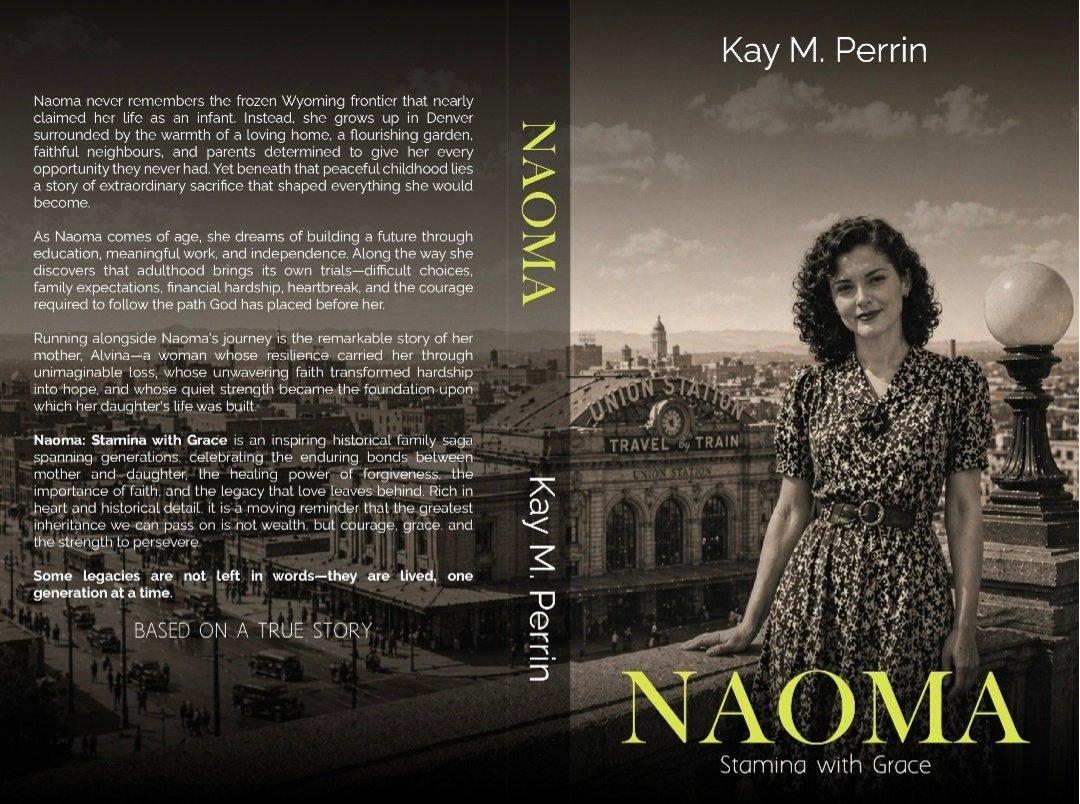
The Great Depression did not strike every American family in one sudden blow. For many, it arrived slowly. Budgets tightened. Jobs disappeared. Cupboards emptied. Fear settled into daily life. In Naoma: Stamina with Grace, Kay Marie Perrin tells this story through Naoma Hursting. Her journey of survival feels both personal and widely familiar.
Lessons from the Prairie
Naoma’s story begins before the 1929 crash. She is the daughter of Alvina, a woman who survived the harsh Wyoming prairie. Isolation, hunger, and constant hard work shaped Alvina’s life. Naoma watched her mother plant gardens in difficult soil and stretch every resource. She learned that survival rarely looks dramatic. It grows from small, steady actions.
Those early lessons stayed with Naoma. When the family later moved to Denver, she carried them into a new kind of hardship. The prairie had taught her how to keep going.
Dreams Deferred in Denver
By the time the Depression gripped Denver, Naoma held clear dreams. She wanted to become a nurse and imagined a life of skill and purpose. Yet economic reality forced a hard choice. Family needs came first. Food, rent, and daily survival demanded her attention. Naoma set aside her nursing hopes and stepped into the work of endurance.
Perrin does not treat this decision lightly. Naoma feels the weight of what she gives up. Still, she continues. She shows up for her family and draws strength from the example her mother set years earlier.
The Quiet Work of Survival
Naoma’s resilience appears in ordinary moments. She measures strength in cups of flour and carefully mended clothes. She tends a garden that might feed more than her own household. Gardens and simple acts of care become symbols of hope. They prove that life can continue even when the future feels uncertain.
The novel shows that this kind of survival includes fear and fatigue. Naoma meets those feelings and keeps moving forward. She practices a quiet form of grace—the decision to keep living and caring when circumstances grow heavy.
Strength Passed from Mother to Daughter
Readers who know Alvina: Strong and Determined will recognize the deep connection between mother and daughter. Alvina’s frontier hardships form the foundation Naoma builds upon. The later novel shows how one generation’s endurance becomes the next generation’s starting point.
Perrin writes with compassion and honesty. She refuses to romanticize poverty. Instead, she focuses on the emotional reality of daily life under pressure. Small household decisions, flickering hope, and steady duty form the heart of the narrative. Naoma’s strength feels real because she earns it through struggle.
Why Naoma’s Story Still Matters
The Great Depression tested families across the United States. Nearly all lost a sense of security. Naoma’s experience offers one clear window into that era while speaking to lasting questions. What does it mean to hold a household together when outside forces push against it? How do love and duty exist alongside exhaustion?
Today’s readers still face economic uncertainty and the pressure to set personal goals aside for family needs. Naoma’s journey offers the example of a young woman who keeps choosing life—through gardens planted anyway, through care given anyway, and through hope practiced even when it feels fragile.
Naoma: Stamina with Grace centers on the transmission of strength across generations. Alvina’s prairie survival becomes Naoma’s Depression survival. Perrin reminds us that history is shaped not only by large public events but also by private decisions to keep going.
Naoma’s journey is not a story of sudden triumph. It is a portrait of steady endurance. For readers who value character-driven historical fiction and multi-generational family sagas, her experience offers both emotional honesty and lasting hope.