Last October, I stood outside a coffee shop in New York City listening to two tourists argue about whether Brooklyn was “outside New York.” That moment explains why so many people misunderstand the city.
New York is not one place. It is five different worlds forced together by history, money, migration, ambition, and pure survival instinct. The boroughs shape how people speak, commute, date, eat, and even dream.
Most travel blogs reduce NYC to Times Square selfies and overpriced pizza slices. That misses the point completely.
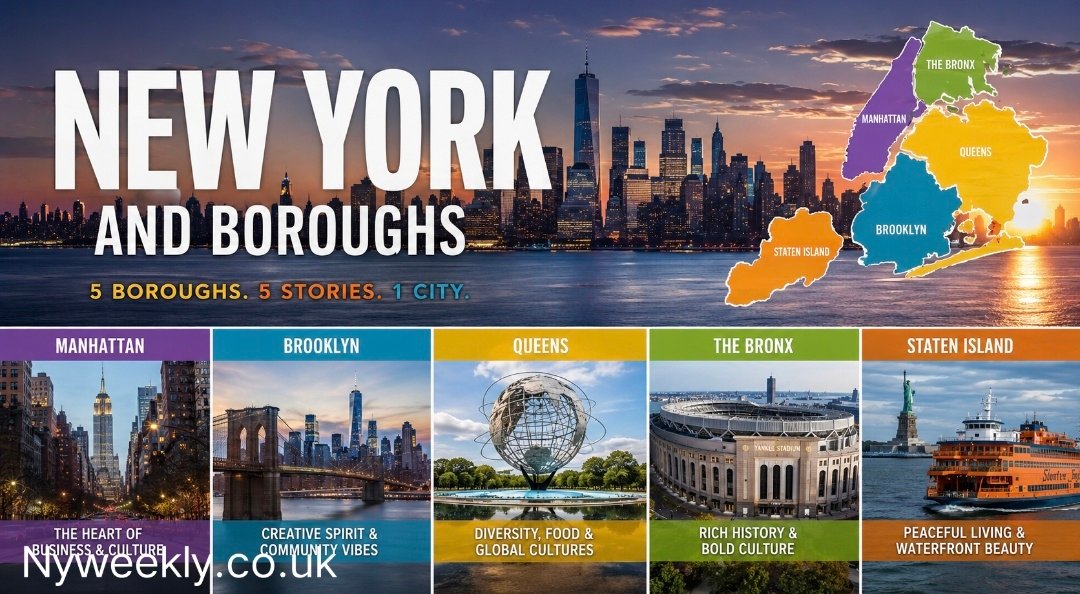
The real story lives inside the boroughs. Manhattan sells the fantasy. Brooklyn sells creativity. Queens sells diversity. The Bronx sells culture and resilience. Staten Island sells space and quiet.
And here’s the uncomfortable truth nobody tells newcomers: your experience in New York depends more on your borough than your salary.
I learned this after spending weeks researching neighborhood data, local reports, transportation trends, crime statistics, housing studies, and tourism records. I also reviewed recent discussions across Reddit, YouTube, and relocation forums. The same patterns appeared repeatedly.
People who understood the boroughs adapted faster. People who treated NYC like one giant neighborhood struggled badly.
This guide breaks down the reality behind each borough, current 2026 trends, housing shifts, transportation realities, cultural identity, and what most online articles still ignore.
Why Do New York Boroughs Matter So Much?
The five boroughs decide your daily lifestyle more than almost anything else in New York City.
READ MORE: Faccccccccccccc: What This Viral Internet Expression Really Means and Why It Is Everywhere
Most outsiders think boroughs are just administrative divisions. They are not. They function like separate cities connected through trains, bridges, and endless human movement.
The five boroughs are:
- Manhattan
- Brooklyn
- Queens
- The Bronx
- Staten Island
Each borough belongs to its own county structure. This system officially formed in 1898 during the consolidation of New York City. Before that, Brooklyn was an independent city.
Here’s what surprised me during research.
The emotional identity of borough residents remains incredibly strong even today. Someone from Brooklyn rarely introduces themselves as “from NYC” first. They say Brooklyn.
That distinction matters socially and culturally.
Manhattan Still Dominates the Global Image of NYC
Most movies, business headlines, and tourism campaigns focus on Manhattan because it concentrates money, media, finance, and recognizable landmarks.
Manhattan contains icons like:
- Times Square
- Central Park
- Wall Street
- Broadway
But here is the catch.
Many longtime New Yorkers actively avoid major parts of Manhattan unless necessary. Tourists imagine nonstop excitement. Residents often see crowds, high prices, and exhausting commutes.
Recent rental reports show Manhattan remains the city’s most expensive borough. Median rent recently approached nearly $4,700 monthly in several areas.
What Manhattan Does Better Than Anywhere Else
Manhattan still wins in several categories:
- Public transportation access
- Corporate headquarters
- Luxury real estate
- Theater and entertainment
- Global tourism visibility
- Walkability
The density creates opportunities unavailable elsewhere.
A founder can pitch investors in SoHo at noon, attend a media event in Midtown at six, and network downtown before midnight without touching a car.
That energy remains unmatched globally.
Brooklyn Became a Brand Instead of Just a Borough
Brooklyn changed dramatically during the last fifteen years.
Older New Yorkers still remember when many neighborhoods were ignored by mainstream investors. Today, Brooklyn operates almost like an international lifestyle brand.
Areas like Williamsburg, DUMBO, and Park Slope transformed through tech money, media attention, and rising property values.
Here’s my controversial opinion.
Some parts of modern Brooklyn now feel more curated than authentic. The borough sells “creative identity” so aggressively that certain neighborhoods resemble startup campuses with coffee shops.
Still, Brooklyn remains culturally powerful.
It combines:
- Independent art scenes
- Diverse immigrant communities
- Music culture
- Startup ecosystems
- Food innovation
- Historic architecture
Brooklyn also became a major entrepreneurship hub.
The Problem Nobody Mentions About Brooklyn
Gentrification changed entire communities.
Local residents in many neighborhoods faced rising rents, disappearing family businesses, and cultural displacement. This issue appears constantly in community discussions and housing debates.
People love Brooklyn aesthetics online. Fewer people discuss who got priced out during that transformation.
That tension still shapes borough politics today.
Queens May Actually Be the Best Borough Overall
This surprised me most during research.
Many relocation experts quietly admit Queens offers the strongest balance between affordability, transportation, diversity, food quality, and lifestyle flexibility.
Queens is geographically the largest borough and one of the most ethnically diverse urban areas in the world.
You can experience dozens of cultures within a few subway stops.
That diversity affects everything:
- Restaurants
- Languages
- Festivals
- Small businesses
- Housing styles
- Community traditions
Queens Is Quietly Becoming More Expensive
Recent real estate reports revealed rising luxury markets in certain Queens neighborhoods.
Malba recently entered rankings among NYC’s most expensive areas after home prices surged dramatically.
Long Island City also exploded in popularity because professionals wanted Manhattan access without Manhattan costs.
But compared with Manhattan or trendy Brooklyn areas, Queens still provides stronger value for many residents.
The Bronx Created More Culture Than It Gets Credit For
The Bronx rarely receives fair treatment in mainstream NYC coverage.
That frustrates many locals because the borough contributed massively to global culture.
The Bronx helped launch:
- Hip-hop culture
- Street art influence
- Important Latin music scenes
- Baseball history
- Distinct food traditions
New York Yankees play in the Bronx at Yankee Stadium.
The borough also contains attractions like:
- Bronx Zoo
- New York Botanical Garden
Crime Perception Versus Current Reality
The Bronx still fights old stereotypes.
Crime remains a concern in some areas, but recent NYPD statistics showed major crime declines across parts of the borough during 2026.
What many outsiders miss is this:
The Bronx contains huge neighborhood differences. Some sections feel suburban and family-oriented. Others struggle economically. Treating the entire borough as identical makes no sense.
Staten Island Feels Like Another State Sometimes
Staten Island barely resembles the stereotypical image of New York City.
That is exactly why some residents love it.
The borough offers:
- More suburban environments
- Detached homes
- Larger living spaces
- More parkland
- Slower lifestyle pace
The free Staten Island Ferry remains one of the city’s best experiences.
The Trade-Off Is Brutal Commute Time
This is where reality hits hard.
Many Staten Island residents sacrifice convenience for affordability and space. Some commutes into Manhattan exceed ninety minutes depending on timing and transit connections.
Recent housing reports also showed Staten Island experiencing unusually high homeowner turnover.
That suggests many buyers still treat the borough as a stepping stone rather than permanent destination living.
Which Borough Is Best for Different Types of People?
There is no universal winner.
The best borough depends on personality, income, work style, family needs, and tolerance for chaos.
| Type of Resident | Best Borough |
|---|---|
| Finance professionals | Manhattan |
| Creative freelancers | Brooklyn |
| Families seeking balance | Queens |
| Budget-conscious residents | Bronx |
| Homeownership seekers | Staten Island |
This is where online guides often fail.
They recommend neighborhoods without considering emotional compatibility. Some people thrive in crowded energy. Others burn out after two weeks.
New York punishes lifestyle mismatches quickly.
Housing Costs Are Reshaping the Entire City
Housing affects every borough conversation now.
New York remains among the world’s most expensive rental markets.
Many residents spend massive percentages of income on rent.
That creates secondary effects:
- Delayed marriage
- Roommate dependence into adulthood
- Longer commutes
- Population shifts
- Remote work migration
Here’s something I noticed repeatedly in community discussions.
Younger professionals increasingly prioritize Queens and northern Brooklyn because Manhattan pricing became psychologically exhausting.
The “dream Manhattan apartment” still exists culturally. Financially, it feels unreachable for many workers.
Transportation Connects the Boroughs but Also Divides Them
The subway system makes NYC possible.
Without it, the borough structure collapses economically.
Yet transportation inequality shapes daily life more than tourists realize.
A Manhattan resident might reach meetings within twenty minutes. Someone traveling from outer borough neighborhoods may spend three hours daily commuting.
That changes quality of life dramatically.
Borough Accessibility Matters More Than Distance
A neighborhood physically closer to Manhattan is not always easier to reach.
This confuses newcomers constantly.
For example:
- Certain Queens neighborhoods connect rapidly through subway lines
- Some Brooklyn areas require multiple train transfers
- Staten Island depends heavily on ferry systems
- Bronx commutes vary enormously by train access
Transportation convenience often matters more than rent alone.
Tourism Gives a Distorted Picture of New York
Most visitors experience maybe 5% of the city.
That is not criticism. The city is enormous.
But tourism creates misconceptions.
Many travelers stay exclusively in Manhattan and conclude they “experienced New York.” In reality, they experienced the entertainment district version of NYC.
The boroughs reveal the actual city.
That includes:
- Community life
- School systems
- Local restaurants
- Daily commuting realities
- Neighborhood traditions
- Immigrant influence
The most memorable NYC experiences often happen outside tourist zones entirely.
The Future of NYC Boroughs Looks Different After 2026
Several major trends are changing borough dynamics right now.
Remote Work Changed Residential Priorities
After hybrid work expanded, more residents prioritized:
- Apartment size
- Green space
- Family-friendly neighborhoods
- Lower rent pressure
That helped outer boroughs attract more attention.
Queens and Brooklyn Continue Growing
Development projects continue pushing eastward through both boroughs.
Previously overlooked neighborhoods now attract investors and renters searching for relative affordability.
Manhattan Still Dominates Prestige
Despite remote work changes, Manhattan still controls symbolic power.
Global finance, media influence, tourism branding, and luxury markets remain concentrated there.
That will not disappear soon.
READ MORE: adswynk com: Understanding Its Role in Online Advertising Platforms
Conclusion
Understanding New York means understanding the boroughs first.
That sounds simple. It is not.
Each borough represents different versions of ambition, identity, culture, and survival. Manhattan chases prestige. Brooklyn reinvents itself constantly. Queens celebrates diversity quietly. The Bronx protects cultural legacy. Staten Island prioritizes space and stability.
And honestly, that tension is what makes New York fascinating.
The city works because the boroughs are different, not because they are unified.
After researching housing trends, cultural shifts, transportation patterns, tourism data, and resident experiences, one conclusion became obvious: the future of NYC belongs increasingly to people willing to explore beyond Manhattan.
That shift is already happening.
The smartest newcomers now ask better questions. Not “How do I move to New York?” but “Which borough actually fits my life?”
That single difference changes everything.
FAQs About New York and Boroughs
What are the five boroughs of New York City?
The five boroughs are Manhattan, Brooklyn, Queens, The Bronx, and Staten Island. Each borough functions as both a political division and a cultural identity within NYC.
Which borough is the most expensive in New York?
Manhattan remains the most expensive borough overall, especially for rent and luxury housing. Several neighborhoods report extremely high median rental prices.
Which borough is best for tourists?
Most tourists prefer Manhattan because it contains famous attractions like Central Park and Times Square. However, Brooklyn and Queens provide more authentic local experiences.
Is Brooklyn bigger than Manhattan?
Yes. Brooklyn is much larger in population and land area compared with Manhattan. It also contains many distinct neighborhoods with separate cultural identities.
Which borough is the safest in NYC?
Safety varies by neighborhood more than borough itself. Some areas in Queens and Staten Island report lower crime rates, while safety conditions differ across Brooklyn, Manhattan, and the Bronx.
Why is Queens considered the most diverse borough?
Queens contains one of the world’s most ethnically diverse populations. Residents speak dozens of languages and represent communities from across the globe.
READ MORE’ https://nyweekly.co.uk/