Blogs
Britain’s new Islamophobia czar has ignited a national debate
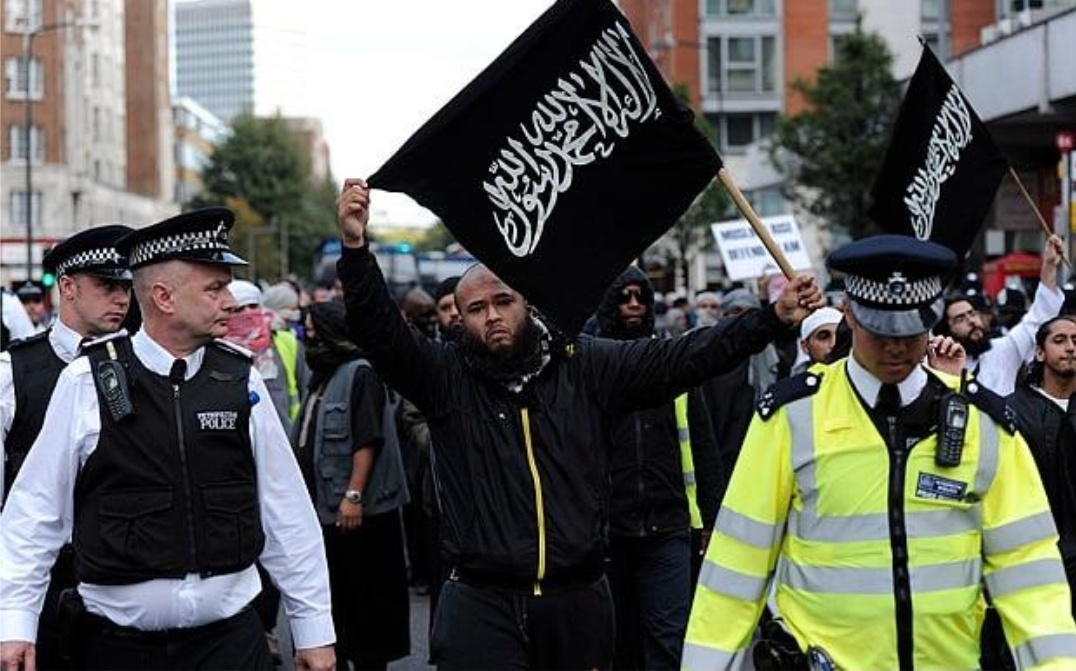
The UK government’s decision to appoint an adviser dedicated to tackling Islamophobia has triggered a broad national debate. Supporters describe the move as a necessary response to rising anti-Muslim hostility. Critics see it as an unnecessary and potentially dangerous expansion of government authority.
The role, sometimes referred to in political commentary as an “Islamophobia czar”, forms part of a wider strategy to address discrimination and social cohesion. It accompanies efforts to develop an official definition of anti-Muslim hostility and to improve how institutions respond to hate crimes and discrimination.
The appointment reflects a growing political recognition that prejudice against Muslims remains a persistent problem in Britain. Yet the debate surrounding the role reveals deeper disagreements about free speech, identity politics and the role of the state.
As with many contemporary issues in British public life, the controversy reflects a country grappling with competing priorities.
Why the government believes the role is necessary
Supporters of the appointment argue that the role fills an important gap in Britain’s approach to discrimination.
Recorded religious hate crimes against Muslims have risen significantly over the past decade. For many campaigners and community organisations, this trend highlights the need for stronger institutional responses.
The government’s new strategy aims to provide clearer guidance on what constitutes anti-Muslim hostility. Officials argue that defining the problem makes it easier to measure, prevent and respond to it.
An adviser or “czar” would help coordinate efforts across government departments, police forces and public institutions. The role is expected to monitor trends in anti-Muslim hatred, recommend policy responses and engage with community groups.
For many British Muslims, the appointment signals that the government is taking their concerns seriously. Some community organisations have argued that formal recognition of anti-Muslim hostility is long overdue.
Supporters also point out that similar roles already exist in Britain. The government previously appointed advisers focused on tackling antisemitism and extremism. The new role is often framed as part of a broader effort to ensure equal protection for all religious groups.
From this perspective, the appointment is not an extraordinary step. Instead it represents an attempt to bring policy on anti-Muslim prejudice into line with existing approaches to other forms of discrimination.
The argument from critics
Despite these arguments, the proposal has faced strong criticism from some politicians, commentators and civil liberties advocates.
One of the central concerns relates to freedom of expression. Critics argue that defining Islamophobia too broadly could discourage legitimate criticism of religion or political ideology.
Some legal experts have warned that an official definition could blur the line between hate speech and legitimate debate. Concerns have been raised that such policies might unintentionally restrict discussions about extremism, religion or cultural practices.
Others worry about the symbolic implications of appointing a government “czar” focused on a particular religious community. They argue that this could create the perception that one group is receiving special treatment.
As of 2025, the Muslim population in the United Kingdom was estimated at around four million people. The population increased from 2.7 million in 2011 to around 3.9 million in 2021 and continues to grow. Muslims in the UK are the second-largest religious group in the UK after Christians – representing a significant voting force in British society.
Some critics of the position believe that a government role focused solely on pro-Muslim issues will stifle free speech on hot-button topics including Iran and Gaza. Others believe it will downplay crimes committed by Muslim-majority communities including the infamous grooming gangs.
For critics on the political right, the proposal also reflects broader concerns about identity politics. They argue that government policy should focus on universal principles of equality rather than targeted initiatives for specific communities.
In this view, existing laws against discrimination and hate crimes are already sufficient. The appointment of a dedicated adviser is therefore seen as unnecessary.
The debate over definitions
At the heart of the controversy lies a deceptively simple question: how should Islamophobia be defined?
The government has increasingly used the phrase “anti-Muslim hostility” rather than Islamophobia in official policy discussions. This wording is intended to focus on discrimination directed at people rather than criticism of religious beliefs.
Yet the shift in terminology has itself become controversial. Some campaign groups argue that abandoning the term Islamophobia weakens efforts to address the problem. Others believe the new language provides a clearer and more precise definition.
Definitions matter because they shape how institutions respond to discrimination. Police forces, universities and local authorities rely on clear terminology when investigating complaints or implementing policies.
The challenge lies in balancing two competing concerns. On one side is the need to protect individuals from discrimination and harassment. On the other is the importance of safeguarding free debate in a democratic society.
This tension sits at the centre of the public debate.
Public opinion: cautious support mixed with scepticism
Public reaction to the appointment reflects the broader complexity of the issue.
Many Britons support stronger measures to combat religious hatred. Surveys and community studies consistently show that the public believes discrimination against religious minorities is unacceptable.
At the same time, there is widespread concern about freedom of speech. The UK has experienced several contentious debates in recent years involving religion, satire and cultural criticism.
These tensions shape how the public views the proposed role.
For some voters, the appointment signals an effort to protect vulnerable communities and strengthen social cohesion. For others, it raises concerns about government intervention in cultural debates.
The divide does not always follow traditional political lines. Support and criticism can be found across the political spectrum.
Some progressive commentators emphasise the importance of addressing discrimination against British Muslims. Meanwhile others within the same political space worry about unintended consequences for open debate.
Similarly, critics of the policy are not limited to conservative voices. Some secular activists and civil liberties groups share concerns about the potential impact on free speech.
The broader political context
The debate surrounding the Islamophobia adviser also reflects broader trends in British politics.
Issues of identity, integration and multiculturalism have become increasingly prominent over the past two decades. Events ranging from terrorist attacks to international conflicts have shaped public perceptions and political discourse.
These developments have influenced how governments approach questions of discrimination and social cohesion.
At the same time, Britain remains a diverse society with a long tradition of religious freedom. Around four million Muslims live in the UK, representing a wide range of ethnic, cultural and political backgrounds.
Policy responses therefore operate within a complex social environment.
Efforts to combat prejudice must address genuine experiences of discrimination. Yet they must also navigate concerns about civil liberties and political neutrality.
The creation of a new advisory role reflects the difficulty of balancing these priorities.
Lessons from past initiatives
The UK has experimented with similar roles in the past. Governments have appointed advisers to address antisemitism, extremism and other forms of discrimination.
These positions often serve as bridges between communities and policymakers. They provide expertise and help coordinate responses across government departments.
However, such roles also attract scrutiny. Questions about independence, political influence and effectiveness frequently arise.
The new Islamophobia adviser will likely face similar challenges. The success of the role may depend less on its symbolic value and more on its practical impact.
Effective policy requires credible data, transparent processes and cooperation across institutions.
Without these elements, even well-intentioned initiatives can struggle to produce meaningful change.
A debate that reflects Britain’s changing society
The argument over the Islamophobia adviser reveals something deeper about contemporary Britain.
The country is increasingly diverse and politically complex. Issues that once existed on the margins of political debate now sit at its centre.
Questions about identity, discrimination and free speech are no longer confined to academic discussions. They shape national politics and public discourse.
The appointment of an adviser to tackle anti-Muslim hostility therefore represents more than a single policy decision. It reflects a wider conversation about how Britain understands itself as a society.
For supporters, the role is a sign that the state is willing to confront prejudice and protect minorities. For critics, it raises difficult questions about the limits of government authority and the preservation of open debate.
Both perspectives capture genuine concerns. The challenge for policymakers lies in finding a balance between them.
The challenge ahead
As the new adviser begins their work, expectations will be high.
Supporters will hope the role leads to tangible progress in tackling discrimination. Critics will watch closely for signs that the position expands government influence over cultural debates.
The future of the initiative may depend on whether it can demonstrate practical value without deepening political divisions.
Britain has long prided itself on its commitment to tolerance and free expression. Maintaining both principles in a rapidly changing society remains one of the central challenges of modern politics.
The debate over the Islamophobia czar shows just how complicated that task has become.
Blogs
Great Depression Survival: Naoma’s Incredible Journey of Resilience
The Great Depression did not strike every American family in one sudden blow. For many, it arrived slowly. Budgets tightened. Jobs disappeared. Cupboards emptied. Fear settled into daily life. In Naoma: Stamina with Grace, Kay Marie Perrin tells this story through Naoma Hursting. Her journey of survival feels both personal and widely familiar.
Lessons from the Prairie
Naoma’s story begins before the 1929 crash. She is the daughter of Alvina, a woman who survived the harsh Wyoming prairie. Isolation, hunger, and constant hard work shaped Alvina’s life. Naoma watched her mother plant gardens in difficult soil and stretch every resource. She learned that survival rarely looks dramatic. It grows from small, steady actions.
Those early lessons stayed with Naoma. When the family later moved to Denver, she carried them into a new kind of hardship. The prairie had taught her how to keep going.
Dreams Deferred in Denver
By the time the Depression gripped Denver, Naoma held clear dreams. She wanted to become a nurse and imagined a life of skill and purpose. Yet economic reality forced a hard choice. Family needs came first. Food, rent, and daily survival demanded her attention. Naoma set aside her nursing hopes and stepped into the work of endurance.
Perrin does not treat this decision lightly. Naoma feels the weight of what she gives up. Still, she continues. She shows up for her family and draws strength from the example her mother set years earlier.
The Quiet Work of Survival
Naoma’s resilience appears in ordinary moments. She measures strength in cups of flour and carefully mended clothes. She tends a garden that might feed more than her own household. Gardens and simple acts of care become symbols of hope. They prove that life can continue even when the future feels uncertain.
The novel shows that this kind of survival includes fear and fatigue. Naoma meets those feelings and keeps moving forward. She practices a quiet form of grace—the decision to keep living and caring when circumstances grow heavy.
Strength Passed from Mother to Daughter
Readers who know Alvina: Strong and Determined will recognize the deep connection between mother and daughter. Alvina’s frontier hardships form the foundation Naoma builds upon. The later novel shows how one generation’s endurance becomes the next generation’s starting point.
Perrin writes with compassion and honesty. She refuses to romanticize poverty. Instead, she focuses on the emotional reality of daily life under pressure. Small household decisions, flickering hope, and steady duty form the heart of the narrative. Naoma’s strength feels real because she earns it through struggle.
Why Naoma’s Story Still Matters
The Great Depression tested families across the United States. Nearly all lost a sense of security. Naoma’s experience offers one clear window into that era while speaking to lasting questions. What does it mean to hold a household together when outside forces push against it? How do love and duty exist alongside exhaustion?
Today’s readers still face economic uncertainty and the pressure to set personal goals aside for family needs. Naoma’s journey offers the example of a young woman who keeps choosing life—through gardens planted anyway, through care given anyway, and through hope practiced even when it feels fragile.
Naoma: Stamina with Grace centers on the transmission of strength across generations. Alvina’s prairie survival becomes Naoma’s Depression survival. Perrin reminds us that history is shaped not only by large public events but also by private decisions to keep going.
Naoma’s journey is not a story of sudden triumph. It is a portrait of steady endurance. For readers who value character-driven historical fiction and multi-generational family sagas, her experience offers both emotional honesty and lasting hope.
Blogs
The Four Energies That Guide Every Souled Being From Separation Back To The Garden Of Higher Consciousness
An Inspiring Glimpse into the Book of Revelation, Volume II, Moving Back To the Garden of Higher Consciousness by Terry L Newbegin shares channeled wisdom from Yeshua and the Ascended Masters. This work presents the Book of Revelation as a living guide that reveals how energy and consciousness interact within every homo sapien to fulfill a long-established divine plan.
How Crystalline Golden Energy Of No Force Serves As The Foundation For All Creation
The book describes crystalline golden energy as the pure neutral force that carries no force at all. It forms the omnipresent universal masculine mind field that every souled being draws upon as an extension and co-creator of the Father Mother God Goddess. This energy remains constant and unchangeable even while homo sapiens explore separation and dual energy through physical form.
The Role Of Crystal Energy In Bridging The Higher And Lower Realms Of Awareness
Crystal energy appears with only a slight touch of duality making it a gentle bridge between pure neutrality and the more polarized realms. The text shows how this energy helped souled beings first step away from complete oneness in the Garden to begin experiencing their own creations. It supports the early stages of consciousness expansion where the divine feminine I AM Oversoul Christ Consciousness begins recording memories.
Cosmic Energy As The Mental Field Where Ideas And Beliefs Take Shape
Cosmic energy operates primarily in the mental realm, allowing homo sapiens to image desires and form belief systems during many lifetimes. The book explains that this energy fuels the outer positive masculine mental mind of reason which works together with the inner negative feminine soul consciousness of responsibility. When aligned with higher awareness it becomes a tool for integrating past Cain ego personality lifetime aspects.
Earth Dual Energy As The Dense Realm Where Wisdom Is Gained Through Direct Experience
Earth energy with its strong positive and negative poles enables souled beings to feel taste smell see and hear their creations in physical bodies. The Revelation interpretation reveals how this dense dual energy created the conditions for the tree of knowledge of good and evil to be experienced across countless lifetimes. It is through sowing and reaping in this realm that homo sapiens gather the wisdom needed to overcome the false human identity.
The Vision Of The Old Valley Passing And The New Earth Emerging Within
A powerful personal vision described in the book shows a violent wind and land tsunami sweeping away the old valley, representing three density consciousness. In its place appears a new majestic landscape filled with colors and trees of greater grandeur. This inner vision corresponds to the current shift beginning around December 21 2020 where the new expansional energy of four gradually overshadows old dual energy patterns.
Integrating All Cain Ego Personality Lifetime Aspects Through The New Energy Of Four
The text emphasizes that the new energy includes positive, negative and neutral energy of no force. This combination allows the reunion of the outer mental mind of reason the inner soul consciousness and the divine feminine I AM Oversoul Christ Consciousness. Past Cain ego personality lifetime aspects that once felt separated now find their way home turning former suffering into accumulated wisdom.
Revealing The Anti-Christ and Beast As Inner Aspects Ready For Transformation
Rather than external figures, the book unveils the outer positive masculine mental mind of reason as the Anti-Christ when it rules in separation and the Cain ego personality aspects as the Beast. These inner elements served their purpose in the exploration of duality but now stand ready for transformation as the new energy rises. The integration process ends the conflict among consciousness mind and ego personalities.
The Physical Body As The Living Temple Where Heaven And Earth Become One
Revelation symbolism of the new Jerusalem descending and the city with twelve gates corresponds directly to the homo sapien physical body and its systems. The twelve openings twelve endocrine functions and major body systems all serve as gates through which higher consciousness flows once integration occurs. This understanding shifts the focus from distant future events to the present possibility of Christ realization within the flesh.
The Golden Age Unfolding As More Homo Sapiens Remember Their Sovereign Nature
As old fear-based systems tied to religions, governments and media continue to lose power, the book points to a golden age where many homo sapiens awaken to their role as co-creators. The distinction between artificial humans and organic souled homo sapiens becomes clearer, supporting the collective movement toward higher consciousness.
By working with these four energies, the return to the Garden becomes real. The book leaves one with a clear sense that higher consciousness is available now in this lifetime.
Blogs
Sacred Places to visit on your Jubilee 2025 Trip
Since it is the vital event in Christianity, Jubilee 2025 presents an opportunity of a lifetime that ushers these pilgrims back out of rediscovery and celebration of their religion in depth. This holy year is celebrated every twenty-five years through the spiritual renewal of the self by Christians through pilgrimage to sacred places of adoration. Imagine all these great places that give an unforgettable, enlightening experience when you are planning your Jubilee 2025 trip. Make sure everything, from the Jubliee 2025 pilgrimage kit, is ready well in time to avoid any last-minute mishaps.
The Great Rome
Dive right into the midst of Jubilee festivities in Rome. Rome is a city steeped in religious history and is home to the Vatican, the hub of the Christian faith, with the leading derivative being St. Peter’s Basilica. During Jubilee years, pilgrims open the Holy Door so as to participate in special Masses and papal audiences. Other basilicas in Rome have special places of worship and meditation that stand out, like the Santa Maria Maggiore, St. Paul Outside the Walls, and St. John Lateran. When you walk the ancient streets of Rome, you find it easy to reflect on the early days of the Christian community and their continuing legacy in the Church.
The Sacred Assisi
Stop by Assisi on your way out of Rome to visit the birthplace of one of Christianity’s most beloved saints: St. Francis. Nestled in the soft Umbrian Hills lies this pretty town, an oasis of calm and respect. The saint’s tomb and the magnificent frescoes painted by Giotto can be found inside the UNESCO World Heritage Site Basilica of St. Francis. Assisi is the most appropriately located town, with serene surroundings and a storied history of St. Francis’s humble but deep-seated beliefs that were sufficient for contemplation and spiritual rejuvenation. Escape into this, a charming town with gently flowing lanes, historic churches, and breathtaking views, away from noise of the larger cities.
Next Stop, Jerusalem
Jerusalem is unmatched in its significance to Christians. Travel from Assisi to Jerusalem. To many, Jerusalem represents deep spiritual value since it is where Jesus was crucified and resurrected. The Church of the Holy Sepulchre encircles the very area of crucifixion and the tomb, while Via Dolorosa is the road Jesus is said to have walked toward Calvary. They can further put themselves in Jesus’ shoes while praying and meditating out in the Garden of Gethsemane and also on the Mount of Olives. That is to say, witnessing the rich tapestry of religion, culture, and heritage that is Jerusalem—truly a once-in-a-lifetime journey.
Lourdes
This would be followed by the French shrine of Lourdes, where in 1858, St. Bernadette Soubirous had apparitions of the Virgin Mary, among other miraculous healings. It is visited by millions of people annually to the Sanctuary of Our Lady of Lourdes in search of relief both physical and spiritual.
Travel to Spain
Finally, a visit to Spain’s Santiago de Compostela offers the unique chance of merging physical with spiritual travel. According to legend, the bones of St. James the Apostle are preserved in the Cathedral of Santiago de Compostela, along a set of pilgrim ways to the town called Camino de Santiago—or even by its more widely used English translation, Way of St. James. The Camino provides an opportunity for spiritual growth via contemplation, prayer, and camaraderie with other travellers. By the time you arrive in Church, you are in time to attend the Pilgrim’s Mass and watch the Botafumeiro or large thurible swung across the ceiling in a ritual of the service. There is no feeling quite like reaching the end of your Camino-it’s a marathon both physically and spiritually completed.
Final Words
Different activities are planned to welcome pilgrims into these places of pilgrimage to participate in the Jubilee year in 2025. Indeed, the reality at each of these places of pilgrimage has much—not insignificant—to contribute to spiritual growth and reflection. The pilgrimage is a journey of faith, discovery, and renewal. In meandering through these shrines, you will engage with Jubilee joy as you deepen your relationship with Christianity and its enduring legacy in the world.