Blogs
Understanding Military Insignia: Symbols of Honor and Identity

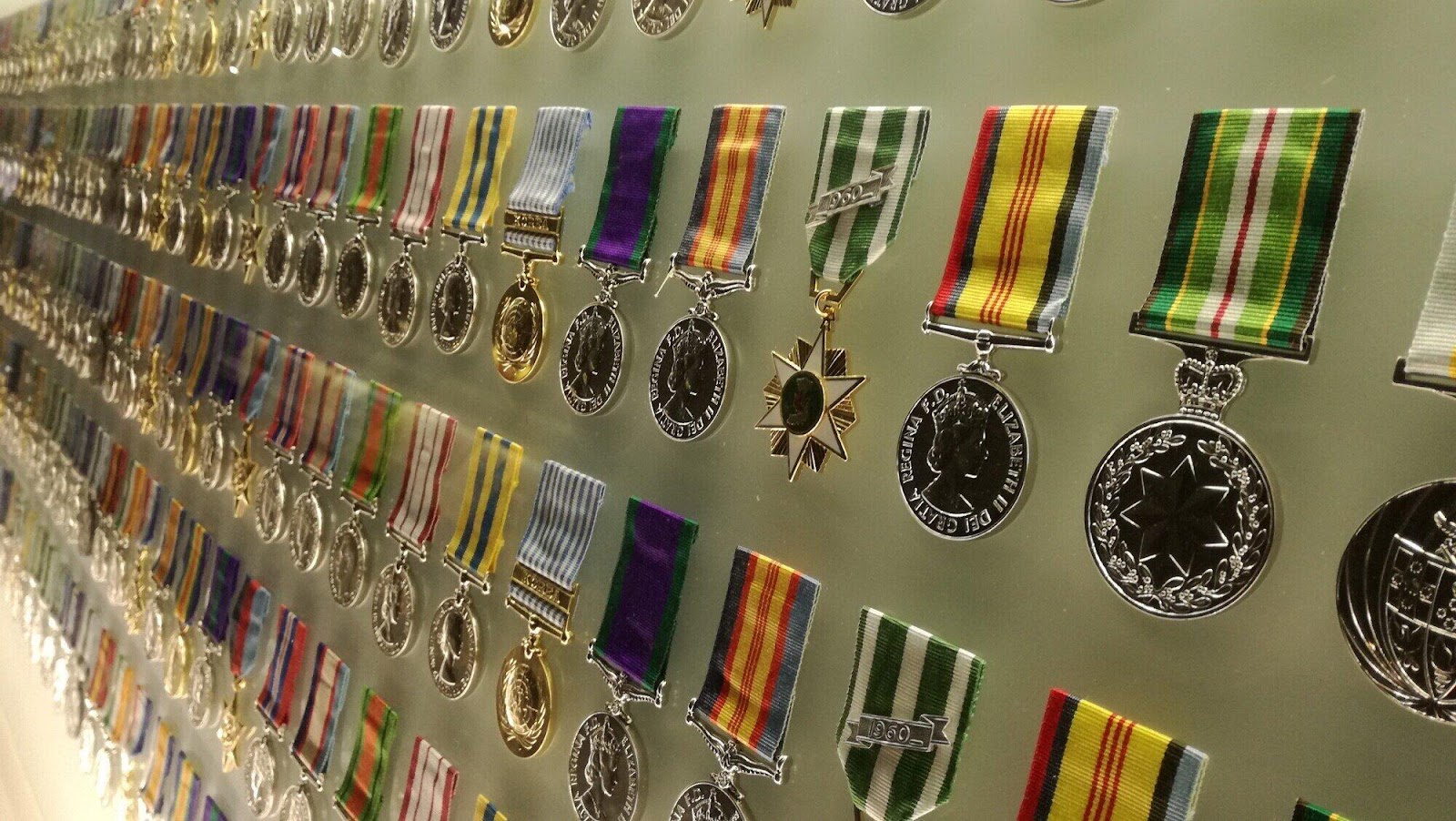
Military insignia have always been more than just badges; they’re symbols of honor, pride, and history. These emblems show rank, but they also tell stories of traditions and sacrifices. Each patch, badge, or emblem carries a deeper meaning, connecting soldiers to a rich legacy of service.
For anyone curious about military culture or eager to learn about the people who wear these symbols, diving into the world of military insignia reveals a whole new perspective on the lives and values of our armed forces. Let’s dive in!
The Basics of Military Insignia
Military insignia help identify soldiers and show their rank, branch, and unit. These symbols come in many forms, like badges, patches, medals, and crests. Badges often show a soldier’s skills or achievements, while patches represent the unit or military branch they belong to.
Each branch of the military, like the Army, Navy, Marines, and Air Force, has its own unique insignia designs. These designs use colors, symbols, and images that reflect the history and values of that branch.
For example, Navy insignias often feature anchors and ships, highlighting their maritime tradition. Meanwhile, airborne insignias may include wings to represent flight skills.
Types of Military Insignia
Knowing the different types of military insignia helps explain their purpose and meaning. The most common types are:
Rank Insignia
Rank insignia represent a service member’s position in the military. They are important symbols that help to distinguish the different levels of authority within the armed forces.
These insignia can include stripes, bars, or stars, and each design is tied to a specific rank. By wearing these symbols, service members show their responsibilities and leadership roles in the military.
Branch Insignia
Each branch of the military has its own unique insignia that reflects its identity and history. These symbols are carefully designed to highlight the values and traditions of each branch.
For example, the insignia British Army includes a crown and sword, representing authority and courage. These emblems help to show pride in the specific branch and connect members to a long-standing tradition of service.
Unit Insignia
Unit insignia are important symbols used to identify a soldier’s specific unit. They often feature unique designs, symbols, or mottos that represent the history and spirit of that unit.
These symbols help foster pride and a sense of camaraderie among soldiers who wear them. By displaying these insignia, soldiers feel a deeper connection to the group and the shared experiences of their service together.
Award/Decorative Insignia
Award and decorative insignia include badges and medals that recognize a soldier’s achievements. These symbols highlight acts of valor, skill, or long service. They serve as honors for outstanding performance or bravery in the line of duty.
The Symbolism Behind Military Insignia
Each insignia has more meaning than just its design. They are based on traditions that carry deep significance. Here are some common themes found in these symbols:
Honor
Many military insignia honor important battles, events, or fallen soldiers. These symbols remind service members of the sacrifices made by others and the importance of their mission. This deep respect for the past strengthens a soldier’s sense of duty and responsibility.
Unity and Belonging
Insignia helps create a sense of unity among service members. Wearing the same emblem connects soldiers, fostering strong bonds formed during training and combat. These symbols serve as a reminder that they are part of something greater than themselves.
Authority and Leadership
Rank insignia are used to show authority and leadership within the military. These symbols make clear the chain of command, ensuring soldiers know their roles and responsibilities. The respect for these insignia helps maintain order and discipline in the military.
Identity and Heritage
Military insignia often reflect a nation’s unique heritage and history. Each design, color, and pattern holds cultural significance, representing the values and spirit of the country. These insignia help soldiers connect to their military’s rich traditions and history.
Variations Across Different Armed Forces
While many basic principles of military insignia stay the same, there are differences between countries and branches. Each nation’s military has its designs that can change in style, color, and meaning.
For example, the United States military insignia features bold symbols like the bald eagle, representing freedom and strength. On the other hand, Commonwealth nations may have similar symbols but with their unique touches. Just like the British Army’s use of the Lion and the Crown to highlight royal history.
As time passes, military insignia have changed to reflect new societal values. Many armed forces have updated their designs to match modern trends while keeping the core meaning of each symbol. Some insignia still honor older designs, while others mix in newer, more contemporary styles.
Wearing Military Insignia with Pride
Wearing military insignia is more than showing rank or achievements; it represents pride, sacrifice, and dedication to service. Those who wear these symbols usually go through tough training and commit to their country. Each insignia becomes a badge of honor, showing who they are.
Many veterans continue to display their insignia after leaving the military, often on clothing or as decorations. This allows them to stay connected to their military past and share their experiences with others. Special events that honor military service often highlight these symbols, giving veterans a chance to tell their stories to a supportive crowd.
Families of service members may also wear insignia to show their pride and connection to the military. Groups like the Blue Star Mothers encourage wearing these symbols to honor their loved ones who serve.
Celebrating Military Heritage Through Insignia
Understanding military insignia helps us learn about the culture, traditions, and history of armed forces worldwide. Each symbol is more than just a design; it tells a story of honor and sacrifice. By exploring these symbols, we not only honor military service but also understand the values soldiers hold dear.
Learning about these important symbols shows the sacrifice, loyalty, and commitment of those who serve. The next time you see military insignia, take a moment to think about the meaning behind them. They hold great significance for both the people who wear them and the countries they represent.
Is this article helpful? Keep reading our blog for more.

One of the most notable worship places in the old town of St Andrews in Scotland is Hope park Martyrs church. The church community is very friendly and the church itself has a rich history and therefore; it has a representation both of the spiritual tradition of the community and the tradition of the Scottish Reformation. Hope Park Martyrs Church is a church that is situated in the town with a rich cultural background and is still used as a place of worship, memorial, and socialization.
The St Andrews historicity
St. Andrews is a place that is associated with golf history and ancient university. It is also referred to as the Home of Golf and the visitors worldwide come to golf at the famous Old Course as well as the long-standing traditions of the game. The University of St Andrews, which is one of the oldest English-speaking university is located in St Andrews and over the centuries it has played a significant role in the intellectual and cultural life of the town. Besides these attractions of interest, the town is also deep in religious heritage that is presented in its old churches, ruins of cathedrals and its places of worship.
History and Development of Hope Park Martyrs Church
The hope park martyrs church occurred due to the merger between the Hope Park Church and the St Andrews martyrs church. Both were well-established and old members of the Church of Scotland and both serve the community of the locality in worship, outreach and pastoral care. Their union brought together the many generations old traditions and created one flock that adheres to the ideals of faith, service and community.
Martyrs in church refers to the protestant reformists, who were burned in St Andrews in the 16 th century following their religious positions. These were great personalities of the Reformation history of Scotland, and their martyrdom became a powerful symbol of religious faith and heroism. By honouring these martyrs in its name the church takes care of an important part of the spiritual heritage of the town.
Architecture and Location
The Hope Park Martyrs Church is located in the heart of St Andrews as far as the old streets and land marks which form the featuring characteristics of the town are involved. The ecclesiastical planning of the church building is the Scotch traditional style of architecture, which is simple in nature with dignity incorporated. The design is quite church-oriented on a friendly atmosphere and community feeling as compared to fancy appearance as in most churches in the Church of Scotland.
The space Hope Park offers greater tranquility to the church. The surrounding of green space, ancient buildings, and empty streets adds to the energy that offers a thoughtful and calm experience that can be utilized to pray and be introspective.
Religion and Community Service
There is a rich and varied congregation in the center of the Hope Park Martyrs Church. They also have Sunday services once a week and feature local residents, students and visitors who do get a place to pray, reflect and fellowship. The church normally accommodates persons who have a high number of cultures and backgrounds because of large numbers of international students present in St Andrews.
There are also other community projects that the church engages in besides the normal worship. These are philanthropic outreachs, education and assistance programs which are not only valuable to the immediate community but also the community. Through these endeavors, the church can still offer its passion to compassion, service and social responsibility.
A Living Legacy in St Andrews
Not only is the Hope Park martyrs church today a place of worship, it is also a symbol of the rich spiritual and historical culture of St Andrews. Despite the strong links that the town has with golf and academic performance, other organizations such as this church assist in reminding the visitors and the town residents that the community has a bright past regarding its formation.
The Hope Park Martyrs Church is a spiritual and historical treasure in the heart of St Andrews which through its dedication to faith and remembrance and service remains an existing delight to the local and visitors who come to the church.

Guilt is quiet. It doesn’t shout; it lingers. In Under the Current, Jared Siler doesn’t write about the kind of guilt that fades after an apology. He writes about the one that stays, the guilt that hides under smiles, routines, and unspoken words. His story moves through that shadowed space where people convince themselves they’ve moved on while their hearts still replay the same moment. It’s haunting because it’s real. Every page feels like a mirror to the parts of yourself you’d rather not meet.
The Past Has A Way Of Whispering When The World Is Silent
Siler’s writing captures how memory never fully disappears. The past waits patiently for the quiet, and then it returns, softly, relentlessly. The character in Under the Current finds that even small triggers bring old feelings rushing back. There’s no escape in distraction, only delay. Through his words, Siler reminds readers that healing doesn’t come from pretending. It comes from facing what the silence brings.
Shame Grows In The Spaces Where Truth Is Avoided
One of Siler’s strongest insights is how easily guilt turns into shame when left unspoken. What begins as regret slowly becomes identity. The character stops seeing himself as someone who made mistakes and starts believing he is the mistake. That quiet shift becomes the emotional center of the story. Siler never lectures. He shows the slow corrosion of hiding, the way shame can convince even strong people to live half-alive.
Forgiveness Does Not Mean Forgetting What Happened
When the character begins to face his guilt, it doesn’t arrive with relief; it arrives with trembling honesty. Siler doesn’t make forgiveness look easy or instant. Instead, he describes it as a decision made again and again, one breath at a time. To forgive yourself, he suggests, isn’t to erase the past but to stop letting it decide who you are. That understanding becomes the quiet heartbeat of the book.

The Current Pulls You Toward The Truth You Keep Avoiding
There’s a reason Siler chose Under the Current as his title. The “current” isn’t just water, it’s conscience, memory, emotion. It’s what moves beneath every calm surface. The character tries to swim against it, to outpace the reminders of guilt, but eventually he understands that the only way forward is through. That moment, when resistance turns into surrender, is written with rare honesty. It’s where the story stops being just fiction and starts feeling like a confession we’ve all made silently.
Freedom Begins When You Admit You’re Still Learning To Heal
part of the story. The character’s transformation isn’t dramatic. It’s slow, raw, and deeply human. He learns that healing isn’t a clean process; it’s a return to truth. The current doesn’t erase his past; it teaches him how to live with it. That realization gives the book its depth and its calm power.
Honesty Becomes The Bridge Between Regret And Redemption
One of the most beautiful threads in Siler’s writing is how he uses honesty as redemption. There’s a turning point when the character finally stops performing strength and begins speaking truth, to himself and to others. It’s not easy. The words stumble, the walls resist, but once honesty begins, peace follows. Siler doesn’t write this as a grand revelation but as a quiet rediscovery. Sometimes the smallest truths are the ones that save you.
The End Feels Like A Beginning You Didn’t Expect To Find
By the final pages, guilt hasn’t vanished, but it’s no longer the main character. Acceptance takes its place. Siler closes the story not with resolution but with release. The reader feels a calm ache, the kind that comes when you realize forgiveness is not about perfection, it’s about permission. The permission to start again, to love again, to be flawed and still worthy of peace. Under the Current leaves you with that quiet courage, the belief that even after mistakes, you can still find your way back to yourself.

As an avid tennis fan, you must be eager to predict what the game will be like in future. Perhaps you are doing this for fun, or perhaps you want to increase your knowledge, and at the same time, supplement your income. Whichever the case, you might become an expert at forecasting tennis scores with a few expert tactics, regardless of your level of experience.
With that in mind, let us check out some of the tips and techniques to help you in predicting tennis scores without a hassle.
Examine the Player’s Performance and Form at the Moment
The first place to look for accurate tennis score predictions is the players’ recent performance. Recent performance is often a reliable indicator of how a player will perform in their upcoming game. For instance, have they recently been winning or losing?
How have they fared in comparison to opponents with higher rankings? You can obtain important information by looking into their win-loss record and track record of consistency.
Consider Surface and Conditions
Conditions and surfaces are crucial factors to look at while predicting tennis scores. Tennis is played on hard courts, grass, and clay surfaces. The way the game is played varies depending on the type of surface, and participants frequently have preferred options.
For example, some players excel on clay but struggle on grass, or the other way around. When attempting to forecast tennis scores, consider the players’ respective performance on each surface. For instance, Roger Federer performs well on grass, and Rafael Nadal excels on clay courts.
Remember the match circumstances as well. Is it outside or inside that the game is being played? Is it hot, muggy, or windy? These elements may have an impact on a player’s performance and overall score.
Employ Statistical Instruments
Sports analytics provides a plethora of websites and tools that provide real-time updates, winning percentages, and comprehensive player statistics. These sites can be used to forecast outcomes based on information.
The Sports Prophets can help you improve your prediction because they track specific statistics like break points saved, first-serve percentages, and victory rates on various surfaces.
Head-to-Head Matchups Matter
Analyzing players’ prior results against one another is a helpful method of forecasting tennis scores. Even against players that are ranked higher, some players find it difficult to defeat them. Examine their previous games to look for any trends.
Does one player typically have an easy win, or do their matches tend to be quite close? You can determine if the match will be competitive or one-sided based on this historical data.
Think about Player Fatigue and Injuries
Fatigue and injury can have an impact even on the best players. Find out if a player is recovering from an injury or has played a lot of matches lately before predicting tennis scores. A fatigued player may not give their utmost effort, which could produce unexpected outcomes.
Analyze Playing Techniques
Tennis is a mental game as much as it is a physical one. The way that players perform has a major impact on how a match turns out. While some players use technique and smart movement to control the game, others are aggressive and hit hard from the baseline.
Comprehending the interplay between several styles can aid in forecasting the outcomes of games. You might anticipate lengthier rallies and more opportunities for tiebreaks, for instance, if a player with a reputation for making big shots is facing a defensive player who excels at returning balls.
Conclusion
Predicting tennis scores requires you to be well-informed, and to have the right intuition and analysis. The above tips and advice from experts are just what you need to navigate this field without a hassle. We hope that our guide has cleared up all of your doubts and errors when it comes to predicting tennis scores.

Achieving Career Transformation Through Online Education

BOT Chain Global Dual-City Resonance: The “Global Offensive” and Better-than-Expected Ecosystem Implementation of the Modular Algorithmic Network

Hope Park Martyrs Church: A Dark spiritual and historic treasure of St Andrews

G15Tool.com Gadgets: Guide to Cutting-Edge Technology

When a Fall Teaches Flight: The Emotional Journey of Baby Hawk – A Story of Love and Survival