Connect with us

Blog

How to Transform Your Vehicle into a Mobile Brand Ambassador

Published

on

Your vehicle can do more than take you from one place to another. It can carry your message everywhere you go. Every stop sign, traffic light, and parking lot becomes a place where your brand gets seen.

You don’t need a loud or flashy setup. All it takes is the right design and a clear goal. That’s how your vehicle becomes a quiet but powerful voice for your business. Read on to learn more!

Know Your Brand First

Before adding anything to your car, make sure you know your brand well. What are your values? What do you want people to feel when they see your logo?

Pick a few words that sum up your brand style. Then choose colors, fonts, and designs that reflect that voice. Keep everything consistent across all your materials.

A strong brand identity enables you to make quick, clear decisions during the design process. And it makes your vehicle stand out in a way that feels true to who you are.

Keep the Message Simple

Less is more. People only have a few seconds to look at your vehicle while driving or walking by. If there’s too much text, they won’t know where to look.

Stick to your business name, your logo, and a single clear line about what you do. Don’t overload the space with too many details.

If it’s readable and memorable, you’ve done your job. Clear beats clever every time.

Make the Design Work

Great design helps your message stick. Use bold colors, simple shapes, and readable fonts. Avoid anything too busy or hard to understand from a distance.

Place your logo where people will see it first. Think about angles-front, side, and back. Each side of the vehicle is a chance to connect.

Use the vehicle’s shape to guide your layout. Work with the curves and panels rather than against them.

Choose the Right Method

There are different ways to brand a vehicle. Some use magnets or decals for small logos or contact info. Others go with full-color designs that cover most of the car.

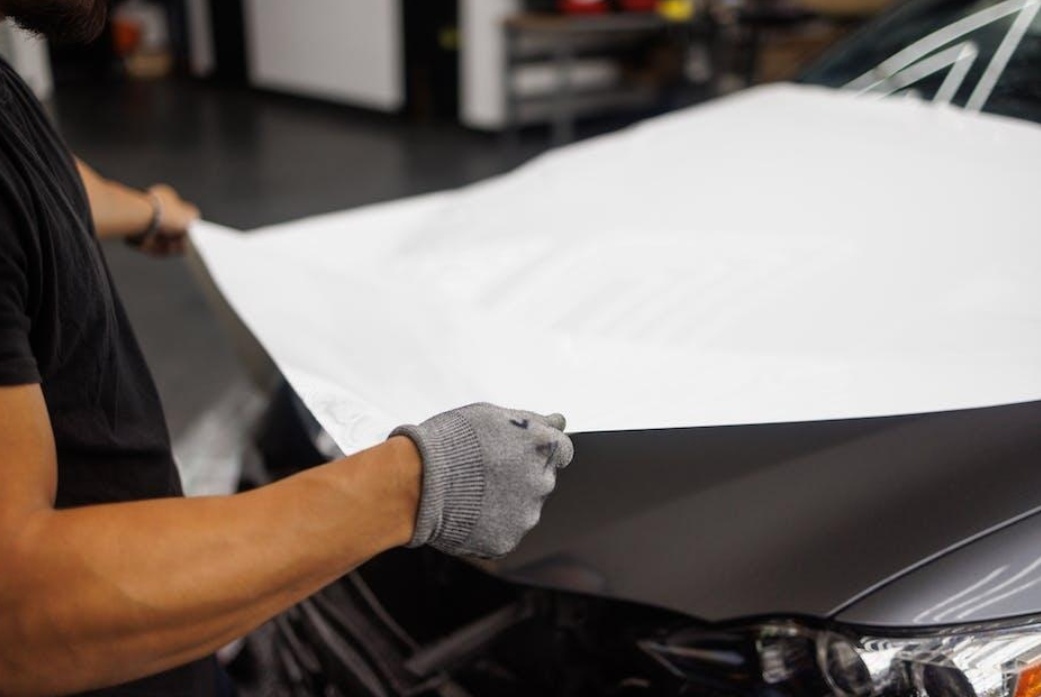
One popular option is vehicle wraps. They allow for large, vibrant graphics that turn the entire vehicle into a mobile billboard. Plus, they’re removable if you ever want to update the look.

Pick the method that fits your goals, your vehicle, and your budget. Even small changes can make a big impact if done right.

Think Like a Viewer

Now picture yourself as someone looking at your car. Where do your eyes go first? Is the text readable? Is the logo easy to spot?

Park your car and take a step back. Walk around it. Check how it looks from every angle and distance.

Ask someone else what they see first. Their feedback can help you adjust the design to make it even stronger.

Be in the Right Places

Where you drive or park matters. If you want people to notice your vehicle, go where your audience is. That might be a busy road, a local market, or near offices.

Even when your car is parked, it’s still doing the job. It quietly reminds people of who you are and what you offer.

Some businesses even leave branded vehicles in high-traffic areas during the day. It’s like having a free billboard that moves when you need it to.

Keep It Clean

Your message only works if people can see it clearly. That means keeping your vehicle clean. Dust, mud, or grime can hide your brand and make your business look careless.

Wash your car regularly, especially the areas with graphics or contact info. If part of your design peels or fades, fix it right away.

Add the Right Contact Info

Give people a way to learn more, but keep it simple. A website, a phone number, or a social media handle is often enough.

Place the contact info where it’s easy to spot, like the back or side panels. Use a font that’s large and easy to read from a short distance.

Match the Vehicle to Your Brand

Your vehicle should feel like part of your overall brand. If your business is creative and bold, the car should reflect that. If it’s clean and precise, go for a simple, polished look.

Think about your industry. A bakery truck might look fun and colorful. A tech service van might look sleek and modern. Match tone and visuals to your field.

Brand More Than One Vehicle

If you have more than one car, van, or truck, use them all. A fleet of matching vehicles builds strong brand visibility.

Make sure every vehicle follows the same color scheme, logo use, and design rules. When people see them around town, they’ll start to remember your name.

Watch for Reactions

After your vehicle is branded, pay attention to what people say. Do customers mention seeing your car? Do you get more calls when you drive through busy spots?

Use this feedback to make changes if needed. If something isn’t working, try a brighter color or a clearer slogan. Small updates can improve results.

Let Your Team Join In

If you have a team, train them to support the message. Give them shirts, caps, or badges that match the vehicle. Let them represent the brand with pride.

If they’re driving the car, they should know how to answer basic questions about the company. This adds a personal touch that builds trust.

Follow the Rules

Some areas have laws about what can be shown on vehicles. Check local rules before installing large graphics or signs.

Also, keep safety in mind. Don’t cover windows or mirrors. Make sure the design doesn’t block your view while driving.

A smart design follows the rules and still looks sharp. Play it safe so you can stay focused on your message.

Start with One Clear Step

You don’t have to do everything at once. Start with your logo. Then add contact info. Then expand to a full design when you’re ready.

Every step forward helps your vehicle do more for your brand. Think of it as a journey, not a sprint.

Leave a Mark That Moves

Your vehicle can become more than just a way to get around. It can carry your brand, your voice, and your message across the city-mile after mile, turning ordinary routes into high-impact visibility.

When executed with strategic clarity, your vehicle evolves into a quiet yet persistent ambassador-broadcasting presence, professionalism, and purpose. Wherever you go, your brand goes with you.

For more on this content, visit the rest of our blog!

Continue Reading

Blog

Master the Art of Predicting Tennis Scores with These Proven Tips and Techniques

Published

on

Master the Art of Predicting Tennis Scores with These Proven Tips and Techniques

As an avid tennis fan, you must be eager to predict what the game will be like in future. Perhaps you are doing this for fun, or perhaps you want to increase your knowledge, and at the same time, supplement your income. Whichever the case, you might become an expert at forecasting tennis scores with a few expert tactics, regardless of your level of experience.

With that in mind, let us check out some of the tips and techniques to help you in predicting tennis scores without a hassle.

Examine the Player’s Performance and Form at the Moment

The first place to look for accurate tennis score predictions is the players’ recent performance. Recent performance is often a reliable indicator of how a player will perform in their upcoming game. For instance, have they recently been winning or losing?

How have they fared in comparison to opponents with higher rankings? You can obtain important information by looking into their win-loss record and track record of consistency.

Consider Surface and Conditions

Conditions and surfaces are crucial factors to look at while predicting tennis scores. Tennis is played on hard courts, grass, and clay surfaces. The way the game is played varies depending on the type of surface, and participants frequently have preferred options.

For example, some players excel on clay but struggle on grass, or the other way around. When attempting to forecast tennis scores, consider the players’ respective performance on each surface. For instance, Roger Federer performs well on grass, and Rafael Nadal excels on clay courts.

Remember the match circumstances as well. Is it outside or inside that the game is being played? Is it hot, muggy, or windy? These elements may have an impact on a player’s performance and overall score.

Employ Statistical Instruments

Sports analytics provides a plethora of websites and tools that provide real-time updates, winning percentages, and comprehensive player statistics. These sites can be used to forecast outcomes based on information.

The Sports Prophets can help you improve your prediction because they track specific statistics like break points saved, first-serve percentages, and victory rates on various surfaces.

Head-to-Head Matchups Matter

Analyzing players’ prior results against one another is a helpful method of forecasting tennis scores. Even against players that are ranked higher, some players find it difficult to defeat them. Examine their previous games to look for any trends.

Does one player typically have an easy win, or do their matches tend to be quite close? You can determine if the match will be competitive or one-sided based on this historical data.

Think about Player Fatigue and Injuries

Fatigue and injury can have an impact even on the best players. Find out if a player is recovering from an injury or has played a lot of matches lately before predicting tennis scores. A fatigued player may not give their utmost effort, which could produce unexpected outcomes.

Analyze Playing Techniques

Tennis is a mental game as much as it is a physical one. The way that players perform has a major impact on how a match turns out. While some players use technique and smart movement to control the game, others are aggressive and hit hard from the baseline.

Comprehending the interplay between several styles can aid in forecasting the outcomes of games. You might anticipate lengthier rallies and more opportunities for tiebreaks, for instance, if a player with a reputation for making big shots is facing a defensive player who excels at returning balls.

Conclusion

Predicting tennis scores requires you to be well-informed, and to have the right intuition and analysis. The above tips and advice from experts are just what you need to navigate this field without a hassle. We hope that our guide has cleared up all of your doubts and errors when it comes to predicting tennis scores.

Continue Reading

Blog

Compelling Reasons for the Switch to Eco-Friendly Tote Bags

Published

on

Compelling Reasons for the Switch to Eco-Friendly Tote Bags

Tote bags are a sort of bag that can be used by either gender. Their adaptability makes them one of the most effective marketing tools for companies. They are made from a variety of materials, each with unique properties and appealing attributes. But in this day and age, there is a need to move away from certain materials and toward eco-friendly alternatives. The relevant arguments for selecting eco-friendly tote bags over other options will be discussed in this article.

1. Decreased Plastic Waste with Eco-Friendly Tote Bags

Plastic is one of the materials used to make some bags. Plastic garbage pollutes the environment, endangers wildlife, releases chemicals into the air, has a detrimental effect on human health, and upsets ecosystems. Introducing eco friendly tote bags is one way to address the problems related to plastic waste from other bags. Eco-friendly tote bags are meant to take the place of single-use plastic bags. By doing this, trash is decreased, and the impacts of plastic waste are reduced.

2. A Reduction in Carbon Footprint

The notable reduction in carbon footprint associated with the use of eco-friendly materials in tote bag production is one of the main drivers of this shift. Reduced carbon emissions result from the energy efficiency and sustainability of the environmentally friendly materials’ production process. Accordingly, the impact of production is minimized, and greenhouse gas emissions are decreased. This creates a cost-effective choice without compromising the environment’s health.

3. Preservation of Natural Resources

Plastic products are discarded regularly, resulting in the consumption of additional resources. But the introduction of eco-friendly materials closes this gap. These recyclable and biodegradable materials help to preserve natural resources.

Furthermore, compared to non-renewable resources like fossil fuels, renewable resources, which are utilized to create some eco-friendly tote bags, may be used sustainably. Additionally, this helps to preserve the environment’s resources. Through the development of the circular economy and the encouragement of sustainable industries, it also promotes sustainable behavior. 

4. The Durability and Reusability of Eco-Friendly Tote Bags

The important environmental and financial benefits of switching to eco-friendly tote bags are largely attributed to their durability and reusability. Long-term reusability of the materials is facilitated by factors such as their high quality, reinforced stitching, ergonomic design, quality control, and design elements. Furthermore, they are more resilient due to their resistance to water and tearing. Their convenience of use is enhanced by these two qualities. This also makes them simple to maintain and clean.

5. Consumer Awareness and Responsibility

Switching to eco-friendly tote bags is also important because it shows a dedication to environmental stewardship and increases consumer understanding of sustainable practices. By using them for marketing purposes, businesses are consciously choosing to reduce the amount of plastic garbage they produce and the related environmental issues like pollution and habitat damage. This is a strategic tactic used by brands to attract environmentally conscientious customers.

Conclusion 

The public appeal of eco-friendly materials is one of the reasons to choose them for tote bag production. Businesses are taking advantage of this to their marketing benefit due to the positive impact on the environment and efficient cost management. 

Continue Reading

Blog

When a Fall Teaches Flight: The Emotional Journey of Baby Hawk – A Story of Love and Survival

Published

on

When a Fall Teaches Flight: The Emotional Journey of Baby Hawk – A Story of Love and Survival

How Curiosity Pushed a Young Hawk Beyond Safety

In Baby Hawk – A Story of Love and Survival by JC Wickey, the story doesn’t begin with action or tragedy; it begins with restlessness. Baby Hawk lives in a safe nest, protected by thick branches and shaded leaves, but comfort slowly turns into confinement. The little bird starts longing for something she doesn’t fully understand, freedom. That moment captures the essence of every living being that outgrows the walls built for safety. Wickey doesn’t rush it; he lets the curiosity feel innocent, almost childlike. One decision, one small step beyond the edge, changes everything.

When One Misstep Became the Start of a Journey

The fall isn’t graceful. It’s sudden, clumsy, and shocking. Baby Hawk hits the ground not as a symbol of failure, but as a new beginning. Wickey describes the scene with tender realism, the shock of landing, the softness of grass, and the unfamiliar world spread open under the sky. For the first time, Baby Hawk feels the world beneath her wings rather than above her. That small detail transforms what could have been a sad moment into a quiet revelation: sometimes the fall is the only way to learn what strength really means.

The Mother’s Panic That Turned Into Purpose

Momma Hawk’s arrival changes the tone from innocence to urgency. She sees her baby helpless on the ground and realizes something crucial, she can’t fix this the old way. She can’t simply lift her back into the nest. Instead, she has to protect herself where she is, in a place full of danger. The maternal instinct, Wickey writes, is raw and immediate. Momma Hawk becomes the embodiment of love under pressure. Her wings, once used for hunting and flying, have now become a shield against the unpredictable world.

Discovering the World from the Ground Up

Baby Hawk begins to notice everything she never could from above: the scent of the earth, the way grass moves with the wind, the vast open sky without branches blocking the view. She’s amazed by the beauty, unaware of the lurking threats. That innocence makes the story deeply human. Wickey shows how discovery often walks hand in hand with danger. For Baby Hawk, the world isn’t divided between safe and unsafe anymore; it’s simply alive.

The Shadows That Tested a Mother’s Strength

As darkness approaches, the book shifts into tension. Momma Hawk senses predators moving nearby. Wickey’s description of the night feels heavy and real, the silence before danger, the weight of exhaustion, the sharp awareness that one mistake could mean loss. When the coyote emerges from the bushes, it’s not written as an action scene, it’s survival written with heartbeat precision. Momma Hawk dives with fearless instinct, striking the predator hard enough to protect her baby. That single act of defiance defines her character. Fear never disappears; it’s simply mastered through love.

Days That Blurred Between Heat and Hunger

Morning brings no relief. Wickey doesn’t idealize the wild; he captures its truth. The days are hot, food is scarce, and exhaustion presses harder with every sunrise. Yet, Momma Hawk doesn’t waver. Her baby needs her. She hunts, defends, and stays close through every threat, a rattlesnake one day, an owl the next. Each confrontation feels heavier because she’s wearing down. Her feathers may stay strong, but her strength begins to fade. Still, she keeps moving, teaching her baby through example that love is not spoken, it’s endured.

The Moment When Despair Meets Determination

There’s a quiet section in the manuscript when Momma Hawk nearly breaks. The endless days without rest catch up to her. She’s hungry, weak, and beginning to lose faith. Then she spots a lizard. That single catch revives her body and spirit. It’s a small victory, but Wickey uses it to mirror the deeper truth: renewal doesn’t always come from great miracles. Sometimes it’s just the smallest act of persistence, the decision to keep trying even when everything says stop.

The First Flight That Redefined Survival

While Momma Hawk regains her strength, Baby Hawk focuses on hers. She practices every day, awkward hops, half-flaps, and small lifts that never last. It’s frustrating, sometimes painful, but necessary. Wickey doesn’t make her success instant; he lets the repetition show what real growth looks like. When the day finally comes that she rises off the ground and reaches the nest again, it feels earned. The image isn’t grand or dramatic; it’s deeply emotional. The ground that once symbolized her fall becomes the launchpad for her independence.

A Circle Completed Through Growth and Gratitude

By the end of Baby Hawk – A Story of Love and Survival, Baby Hawk has grown into her own strength. She’s not the helpless creature from the grass anymore. Now she understands the patience, courage, and love that raised her. When she becomes a mother herself, the story completes its quiet circle. She carries the same protective instinct, the same endurance that saved her. Wickey’s closing pages remind readers that strength doesn’t come from never falling, it comes from falling and choosing to rise every single time.

Continue Reading

Trending

Copyright © 2026 NYWEEKLY.CO.UK